What Is a DAF Articulated Tanker? Key Benefits Explained
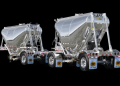
If you’ve spent any time around heavy-duty hauling, especially in sectors like fuel transport, waste management, or agriculture, you’ve likely seen a unique type of rig: a tractor pulling a tank that seems to bend in the middle. That, in essence, is a DAF articulated tanker. But what exactly sets it apart from a standard tanker truck? Simply put, a DAF articulated tanker is a powerful combination of a DAF tractor unit and a specialized semi-trailer tank, connected by a pivoting joint (the fifth wheel). This articulation is the key to its maneuverability and versatility. This configuration is a cornerstone of modern bulk liquid and dry bulk transport across Europe and North America, offering a blend of power, efficiency, and safety that rigid trucks can’t always match. Let’s dive into the specifics of what makes this vehicle so critical and unpack its key benefits for fleet operators and drivers alike.
Breaking Down the Components: More Than Just a Tank on Wheels
Understanding a DAF articulated tanker starts with its two main parts. The first is the DAF tractor unit, the powerhouse of the operation. DAF, known for its robust engineering and fuel-efficient PACCAR engines, provides the reliability needed for demanding tanker operations. The second part is the tanker semi-trailer. This isn’t a simple container; it’s a complex vessel designed for specific cargoes. It can be insulated, pressurized, or equipped with multiple compartments for carrying different products in a single trip. The critical link is the fifth wheel coupling, which allows the trailer to pivot independently from the tractor. This articulation is what enables the vehicle to navigate tighter city corners and complex site entrances that would challenge a longer rigid tanker truck.
Key Advantages of Choosing an Articulated Tanker Setup
Why do so many logistics companies opt for this articulated design? The benefits are tangible and impact both the bottom line and operational safety.
Superior Maneuverability and Flexibility
The articulated design’s greatest strength is its turning circle. By allowing the trailer to cut a tighter path behind the tractor, drivers can operate more confidently in urban environments, crowded depots, and on rural farm tracks. This flexibility also translates into route planning. An articulated tanker can often access delivery points that are off-limits to longer single-unit vehicles, providing a competitive advantage. As noted by transport logistics expert Michael Torrance, a certified instructor with over 20 years of experience, “The articulation in a tanker setup isn’t just about steering; it’s about creating operational options. It allows a single powerful tractor to serve multiple specialized trailers, maximizing asset utilization.”
Enhanced Safety and Stability Features
Transporting liquids introduces unique dynamics, like surge, which is the forward-and-backward motion of the liquid inside the tank. Articulated tanker trailers are engineered to mitigate this. Features like baffles (internal bulkheads), multiple compartments, and a lower center of gravity—often achieved by using a drop-frame trailer—work together to improve stability. The separation of the tractor and trailer mass can also contribute to better weight distribution across axles, which is crucial for adhering to strict road weight regulations and maintaining tire grip. According to a Federal Motor Carrier Safety Administration (FMCSA) study, proper vehicle configuration and load securement are primary factors in preventing rollovers and loss-of-control incidents.
Operational Efficiency and Cost-Effectiveness
This model promotes efficiency. The tractor unit can be detached and used with other compatible trailers (like a flatbed or box trailer) when the tanker is being cleaned or serviced, reducing downtime. Maintenance can also be more straightforward, as major work on the tractor or trailer can be performed independently. From a cost perspective, while the initial investment might be significant, the flexibility and potential for higher utilization rates often lead to a better total cost of ownership over the vehicle’s lifespan.
Articulated Tanker vs. Rigid Tanker Truck: A Side-by-Side Comparison
Choosing between an articulated tanker and a rigid tanker truck depends heavily on your specific needs. The following table breaks down the core differences.
| Feature | DAF Articulated Tanker (Tractor + Semi-Trailer) | Rigid Tanker Truck (Single Unit) |
|---|---|---|
| Maneuverability | Generally better in tight spaces due to the pivoting point. | Can be less agile, especially with longer wheelbases. |
| Payload Capacity | Often higher, optimized for long-haul bulk transport. | May be limited by single-unit length and axle constraints. |
| Versatility | High. Tractor can be used with different trailer types. | Low. The tank body is fixed to the chassis. |
| Initial Cost | Higher initial investment for two separate units. | Typically lower initial purchase price. |
| Ideal Use Case | Long-distance fuel transport, bulk chemical haulage, interstate logistics. | Regional deliveries, municipal services (septic, water), shorter fixed routes. |
Critical Considerations for Operation and Specification
Operating a DAF articulated tanker isn’t just about driving a truck. It requires specific knowledge. Drivers need specialized training, often including a Tank Vehicle endorsement and familiarity with handling liquid surge. The specification process is also vital. You must match the tractor’s power and axle configuration to the trailer’s weight and the intended cargo. For instance, hauling dense liquids like industrial chemicals requires a different setup than hauling light vegetable oils. Partnering with a manufacturer that understands these nuances is key. For those exploring reliable and well-specified options, Chinese Truck Factory offers a range of tanker solutions that can be paired with quality tractor units, ensuring a balanced and compliant combination for various global markets.
Real-World Applications: Where These Tankers Shine
You’ll find DAF articulated tankers hard at work in several essential industries. In the fuel sector, they are the backbone of distribution, moving gasoline and diesel from terminals to service stations. In the chemical industry, they transport everything from food-grade ingredients to industrial solvents in dedicated, safely designed tanks. They’re also indispensable in agriculture for hauling liquid fertilizers or milk from dairy farms to processing plants. Even in wastewater management, articulated vacuum tankers provide the reach and capacity needed for large-scale industrial cleaning. The International Energy Agency (IEA) highlights the continued reliance on efficient fuel logistics, a sector where these tankers play a central role.
Frequently Asked Questions (FAQs)
What special license is needed to drive an articulated tanker?
In most jurisdictions, you’ll need a standard commercial driver’s license (CDL/Class 1) for the articulated vehicle. Additionally, you must pass a written and skills test for a “Tank Vehicle” (T) endorsement to handle the unique challenges of liquid cargo. For hauling hazardous materials, an “H” endorsement is also mandatory.
How does the weight distribution work on these tankers?
Weight distribution is critical for safety and legality. The load is spread across the tractor’s drive axles and the trailer’s multiple axles. Operators must carefully calculate the weight of the liquid cargo to ensure neither the tractor nor trailer axles exceed their Gross Axle Weight Rating (GAWR), and the entire combination stays under the Gross Combination Weight (GCW) limit. Load sensors and on-board weighing systems are becoming common aids.
Are articulated tankers more expensive to maintain than rigid ones?
Maintenance costs can be compartmentalized. The tractor unit may require standard drivetrain servicing, while the trailer needs specific care for its tank integrity, valves, and pumping systems. The potential cost benefit lies in uptime: if the trailer is out for service, the tractor can still earn revenue with another trailer, which isn’t possible with a rigid truck.
Can one tractor be used with different types of tanker trailers?
Absolutely, provided the tractor has the correct fifth wheel coupling and sufficient power and axle capacity to handle the weight of the new trailer and its cargo. This “power-to-trailer” interchangeability is a major economic advantage of the articulated system, allowing fleets to adapt quickly to changing haulage needs.
In summary, a DAF articulated tanker represents a sophisticated, flexible solution for modern bulk transport. Its design directly addresses core needs in the industry: navigating complex routes safely, handling sensitive liquid cargoes, and maximizing the efficiency of valuable assets. For any operation involved in moving liquids or dry bulk over distance, understanding and leveraging the benefits of this vehicle configuration is a strategic step toward a safer, more profitable, and more adaptable fleet.
Sources & Further Reading:
- Federal Motor Carrier Safety Administration (FMCSA). Commercial Motor Vehicle Crash Causation Study. https://www.fmcsa.dot.gov/safety/research-and-analysis/commercial-motor-vehicle-crash-causation-study
- International Energy Agency (IEA). The Role of Gas in Today’s Energy Transitions. https://www.iea.org/reports/the-role-of-gas-in-todays-energy-transitions
- Torrance, M. (Personal communication, March 2023). Transport Logistics Consultant & Certified Instructor.