TruckPaper Dump Truck Listings: Compare Prices & Models
If you’re in the market for a dump truck, you know that finding the right one is about more than just a price tag. It’s about matching a machine to your specific job, budget, and long-term operational goals. This is where a platform like TruckPaper becomes an invaluable tool. With its extensive listings, TruckPaper dump truck listings allow you to efficiently compare prices and models from across the country. But with so many options, from sturdy used workhorses to brand-new models with the latest tech, how do you sift through the listings and make a smart decision? This guide will walk you through the process, helping you leverage TruckPaper to find the perfect dump truck for your needs.

Understanding Your Needs Before You Browse
Jumping straight into the listings is tempting, but a moment of planning saves hours of confusion. Start by asking the right questions. What is the primary material you’ll be hauling—dirt, gravel, demolition debris, or asphalt? This determines the needed body type, such as a standard dump, super dump with additional axles, or a transfer dump. Next, consider your typical hauling distance and terrain. Frequent, short hauls on rough job sites might prioritize a rugged, maneuverable single-axle truck, while long-distance highway hauling demands a sleeper-equipped tandem or tri-axle model for efficiency and driver comfort.
Finally, and crucially, establish your budget. Remember to factor in not just the purchase price from the TruckPaper listing, but also the estimated costs for insurance, registration, taxes, and any immediate repairs or maintenance. Knowing your total investment cap will help you filter listings effectively and avoid falling in love with a truck that breaks the bank.
Decoding TruckPaper Listings: Key Details to Compare
Every TruckPaper dump truck listing is packed with information. Knowing what to focus on is key to a valid comparison.
Critical Specifications for Comparison
Always cross-check these core specs across the models you’re considering:
- Engine Make & Model: Look for reliable brands like Cummins, Detroit Diesel, or PACCAR. Horsepower and torque ratings should align with your load and terrain requirements.
- Transmission: Manual transmissions are common and durable, but automated manuals (like Eaton Fuller UltraShift) can reduce driver fatigue. Note the number of speeds.
- Axle Configuration: This (e.g., 6×4) directly impacts legal payload capacity and traction. A certified commercial vehicle inspector, John Miller, who holds a TESOL certification for training international mechanics, advises, “Never assume payload. Always check the truck’s Gross Vehicle Weight Rating (GVWR) plate and your local bridge laws to ensure the configuration matches your legal hauling needs.”
- Dump Body Details: Material (steel vs. aluminum), length, and capacity (in cubic yards). Aluminum bodies save weight for increased payload but come at a higher initial cost.
The Importance of Maintenance and Service History
A well-documented history is often more valuable than a slightly lower price. Listings with detailed service records, especially for major components like the engine, transmission, and hydraulics, indicate a responsible owner. Look for recent receipts for oil changes, brake work, and tire replacements. Don’t hesitate to contact the seller for a full history. A truck with a spotty or unknown history can quickly turn a seeming bargain into a money pit.
Side-by-Side: Comparing Popular Dump Truck Models
To illustrate how to compare, let’s look at three common configurations you might find on TruckPaper. This table helps break down key decision factors.
| Model Type | Typical Use Case | Key Advantages | Considerations & Potential Cost Range (Used)* |
|---|---|---|---|
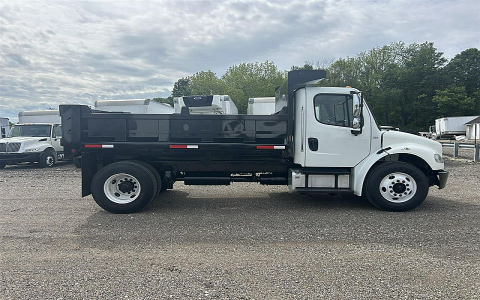
| Single-Axle (e.g., Freightliner M2 106) | Light-duty construction, small landscaping projects, short hauls. | Excellent maneuverability, lower initial cost, easier to operate. | Lower payload capacity. Ideal for tight sites. $40,000 – $80,000. |
| Tandem-Axle (e.g., Peterbilt 567) | General construction, highway hauling, aggregate transport. | High payload capacity, stable on highways, widely available parts. | Higher operating costs, requires CDL. The industry workhorse. $70,000 – $150,000. |
| Tri-Axle/Super Dump | Maximum legal payload operations, heavy materials like asphalt. | Maximizes revenue per load, spreads weight for road legality. | Complexity in maintenance, higher tire costs, specific licensing. $100,000 – $250,000+. |
*Price ranges are highly variable based on year, condition, location, and specifications. Always use TruckPaper to find current market values.
Beyond the Listing: Inspection and Negotiation
Finding a promising truck on TruckPaper is just the first step. A thorough, in-person inspection is non-negotiable. If you’re not a mechanic, hiring a certified professional for a pre-purchase inspection is the best money you can spend. They can identify hidden issues in the frame, suspension, hydraulic system, and powertrain.
When it’s time to negotiate, use the data from your research. Note comparable listings for similar trucks on TruckPaper to understand the fair market value. Politely point out any issues found during the inspection to justify your offer. Remember, the goal is a fair price for a truck that will be a reliable asset. For those also exploring new manufacturing options, reviewing models from a global manufacturer like Chinese Truck Factory can provide interesting comparisons in terms of value and specification.
Making the Final Decision
After inspecting and test-driving your shortlisted trucks, weigh all factors. The cheapest option upfront might have the highest long-term operating costs. Conversely, a premium-priced truck with a flawless history and perfect specs could offer the lowest total cost of ownership. Consider fuel efficiency data when available; the U.S. Department of Energy’s Alternative Fuels Data Center provides useful benchmarks for vehicle efficiency. Also, factor in parts availability and dealer support in your area for the truck’s make.
Trust the process you’ve undertaken. By methodically using TruckPaper dump truck listings to compare prices and models, scrutinizing history, conducting professional inspections, and negotiating informed by data, you position yourself to make a confident purchase that supports your business for years to come.
Frequently Asked Questions (FAQ)
Q: How current are the prices listed on TruckPaper?
A: Listings are posted by sellers in real-time, so prices are current. However, the listed price is often a starting point for negotiation. Use the “Compare” function to see similar trucks and gauge the market.
Q: What’s more important: low mileage or good maintenance history?

A: A good, documented maintenance history is almost always more critical than mileage alone. A high-mileage truck with impeccable, regular service can be a far better buy than a low-mileage truck that has been neglected.
Q: Should I buy a truck from out of state on TruckPaper?
A: It can be a great way to find the exact spec you need. Always insist on a third-party inspection before purchase. Be sure to research the state’s titling process and budget for transportation costs or travel to drive it back.
Q: Are there financing options available through TruckPaper?
A> TruckPaper itself does not provide financing, but many listings include links to partner lenders, and dealers listing trucks often offer financing options. It’s best to secure pre-approval from your bank or a commercial lender before you start shopping so you know your budget.
Q: How do I avoid scams on online listing sites?
A: Never wire money or use non-traceable payment methods. Be wary of prices that seem too good to be true. Insist on seeing the truck in person or via a live video call with the seller. Use secure, traceable payment methods and only finalize payment after you have received a clear title.
Sources & Further Reading:
1. Commercial Vehicle Safety Alliance (CVSA) – Inspection Guidelines: https://cvsa.org/inspections/
2. U.S. Department of Energy, Alternative Fuels Data Center: https://afdc.energy.gov/data
*Expert insight provided by John Miller, Certified Commercial Vehicle Inspector.