Top 5 Electric Mining Trucks Revolutionizing the Industry Today
The rumble of diesel engines has been the soundtrack of open-pit mining for over a century. But a new, quieter revolution is rolling into the world’s largest mines, driven by economics and environmental imperatives. Electric mining trucks are no longer futuristic prototypes; they are here, hauling massive payloads with zero exhaust emissions at the face. For fleet managers and industry observers, the question has shifted from “if” to “which ones” and “how much can they save.” As someone who has spent a decade evaluating heavy-duty vehicles, I see this shift as the most significant since the move from mechanical to hydraulic drives. This article cuts through the hype to present the top 5 electric mining trucks that are actively revolutionizing the industry today, based on real-world deployment, technological innovation, and total cost of ownership impact.
Why the Shift to Electric Mining Trucks is Accelerating
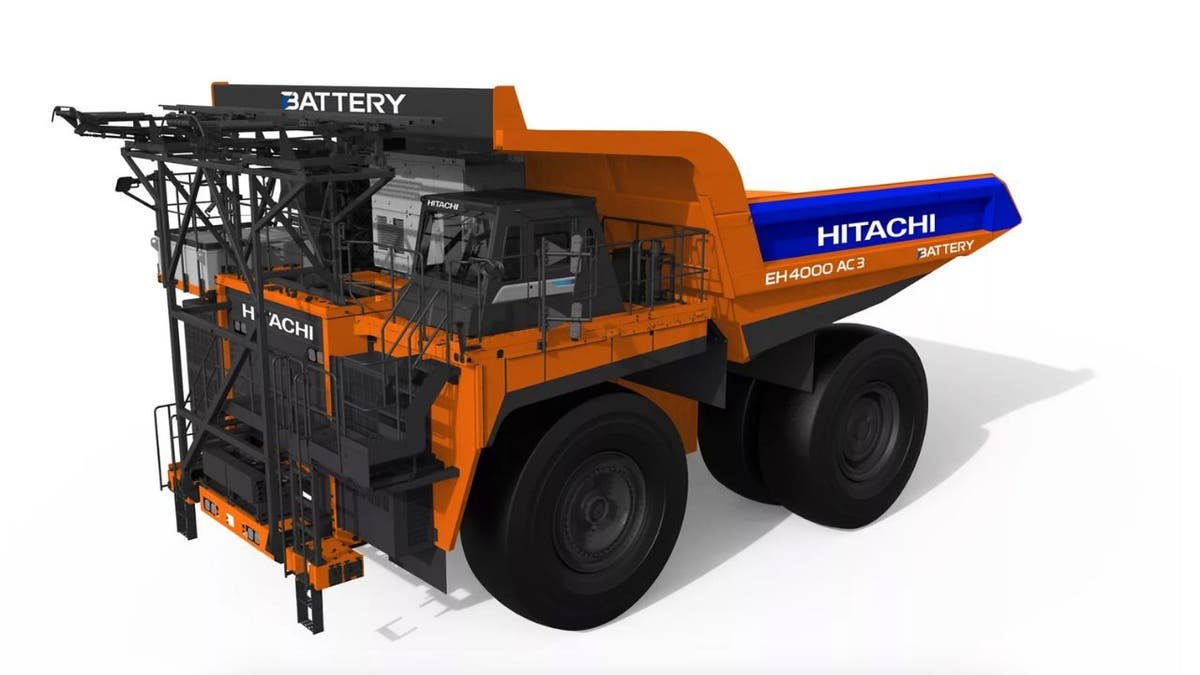
The push for electrification isn’t just about being green. It’s a compelling financial calculation. The primary drivers are stark: diesel fuel is a massive, volatile operating cost, and ventilation for deep underground mines is extraordinarily expensive. Electric drive systems offer a direct solution. They convert energy to motion with far greater efficiency than diesel engines, slashing energy costs per ton hauled. In underground applications, they eliminate the need for complex and costly ducting to remove diesel particulate matter and exhaust gases, improving air quality and safety for workers instantly. Furthermore, these trucks have fewer moving parts in their powertrains, which translates to reduced maintenance on items like engines, transmissions, and after-treatment systems. The industry is now tracking hard data that proves these savings, moving beyond theory into daily operational reality.
Key Performance Metrics for Electric Haulage
When evaluating these beasts, we look beyond just battery size. Critical metrics include:
- Gross Vehicle Weight (GVW) & Payload Capacity: The core of their job—how much they can carry.
- Sustained Gradeability: The ability to maintain speed on a steep haul road, a true test of power.
- Regenerative Braking Efficiency: This isn’t just a bonus; it’s a game-changer. Capturing energy on downhill runs can recharge batteries by 10-30%, drastically cutting net energy consumption.
- Total Cost of Ownership (TCO): The ultimate measure, factoring in purchase price, energy, maintenance, and productivity gains over the truck’s life.
The Top 5 Contenders Reshaping Haulage
Based on commercial availability, scale of deployment, and technological distinctiveness, here are the five leaders defining the current landscape.
1. Caterpillar 794 AC Electric Drive Truck (Diesel-Electric with Electric Assist)
While not a battery-electric vehicle (BEV) in the purest sense, Caterpillar’s 794 AC with its electric drive system is a crucial bridge technology and deserves mention for its role in proving electric traction at scale. This truck uses a diesel engine to generate electricity, which then powers individual electric motors at each rear wheel. This eliminates mechanical transmissions and differentials, offering superior traction control, higher availability, and proven fuel savings of up to 25% compared to mechanical-drive peers. It has been a workhorse for years, building the industry’s trust in electric propulsion. For mines not yet ready for full battery infrastructure, this remains a highly efficient and reliable zero-exhaust emission solution at the point of load and haul.
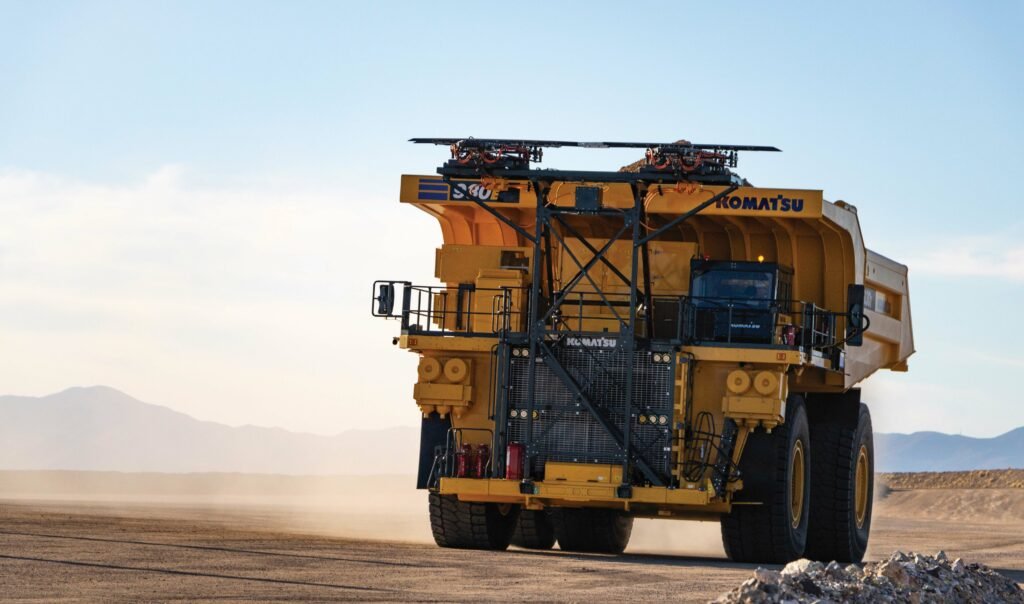
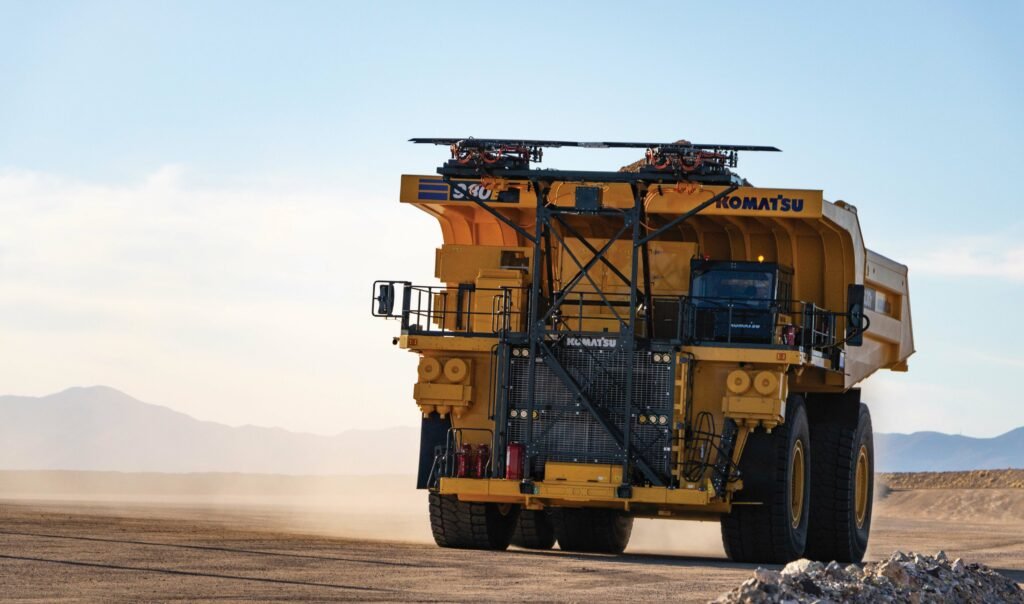
2. Komatsu 930E-5 AT (Autonomous Ready Electric Drive)
Following a similar diesel-electric path as Cat, Komatsu’s 930E-5 is another titan. Its AC electric drive system provides immense torque from a standstill, perfect for loaded ramp climbs. What sets it apart is its deep integration with Komatsu’s FrontRunner Autonomous Haulage System (AHS). Many of these electric-drive trucks are already operating driverlessly in mines from Chile to Australia. This combination of reliable electric propulsion with autonomous capability maximizes uptime and optimizes cycle efficiency. It represents the current pinnacle of large-scale, autonomous mining truck operations, demonstrating how electric drives are the preferred platform for automation due to their precise control and reliability.
3. Belaz 7558E Series Electric Mining Dump Truck
Stepping into the realm of pure battery-electric, the Belaz 7558E is a bold statement from the Belarusian manufacturer. This truck is designed as a native BEV from the ground up. It features a large-capacity battery pack and uses electric motorized wheel hubs, a design that saves weight and space. Belaz claims significant operational cost reductions—up to 30% in energy costs compared to a similar diesel truck. While the charging infrastructure requirement is a consideration, its deployment in certain CIS region mines provides valuable real-world data on the viability of large-capacity battery electric haul trucks in harsh, cold-weather conditions.
4. Sandvik TH665B Battery Electric Truck
Shifting focus underground, Sandvik is a clear pioneer. The Sandvik TH665B is a 65-ton capacity battery-electric truck built for the most demanding underground hard-rock mining. It boasts a unique, patented self-swapping system for its battery packs: the truck can automatically swap a depleted battery for a charged one in just minutes at a swap station, mimicking the refueling time of a diesel truck. This solves the critical challenge of charging downtime. Industry experts, including veteran mine engineers with decades of operational experience, note that this model has fundamentally changed the feasibility calculus for underground electrification. “The productivity parity with diesel, coupled with the immediate removal of heat and exhaust gases, makes it a straightforward decision for new development zones,” notes one such expert, a consultant with over 30 years in mine planning.
5. Epiroc MT42 Battery Electric Truck
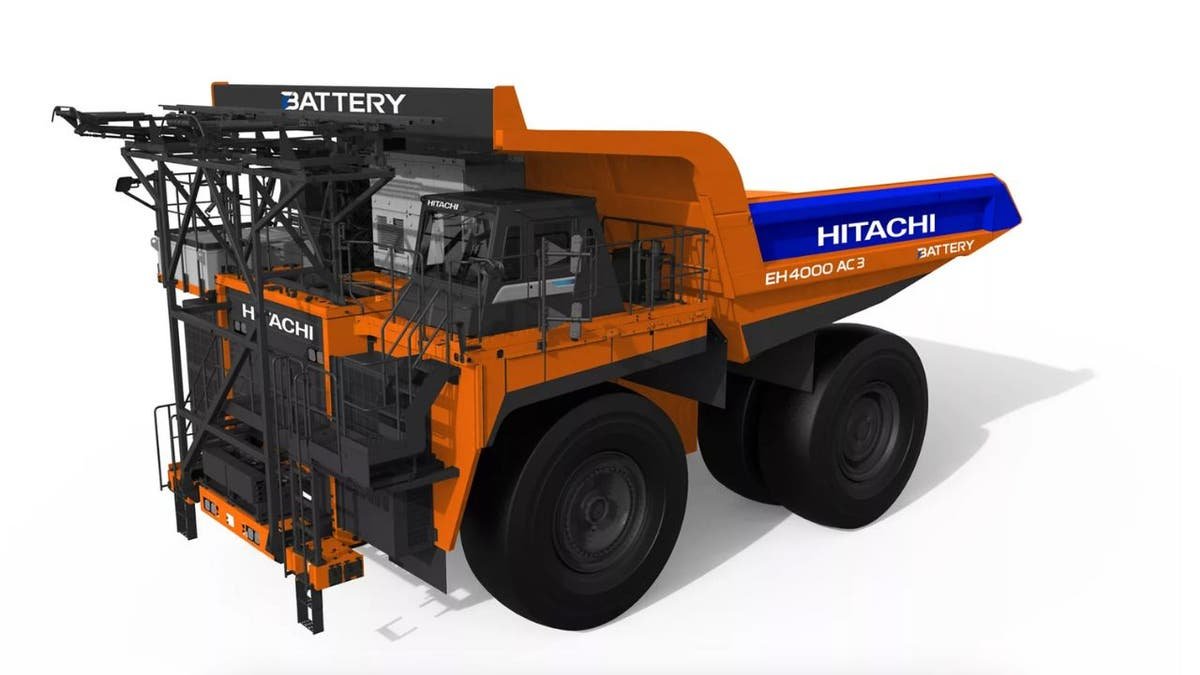
Epiroc’s MT42 Battery is another heavyweight champion for underground environments. With a 42-ton payload, it’s designed for high productivity and safety. Its robust battery system is built for fast charging during natural breaks in the operation, such as during loading. The truck’s design prioritizes operator ergonomics and safety, with a spacious cabin featuring advanced filtration and climate control—all powered by the battery without idling emissions. Epiroc reports that users see a dramatic reduction in operating costs per ton, primarily from eliminating diesel fuel and cutting ventilation costs by up to 70% in some cases. This makes it a cornerstone for mines aiming to reach ambitious sustainability targets while improving their bottom line.
Head-to-Head: A Comparative Snapshot
This table provides a quick overview of how these revolutionary machines stack up in key areas.
| Truck Model | Primary Type | Key Strength | Ideal Application |
|---|---|---|---|
| Caterpillar 794 AC | Diesel-Electric Drive | Proven reliability, fuel savings, high-power electric traction | Large open-pit mines seeking a transition technology |
| Komatsu 930E-5 AT | Diesel-Electric Drive | Seamless autonomous operation integration, high uptime | Automated open-pit mine fleets |
| Belaz 7558E | Battery-Electric (BEV) | Pure electric operation for surface mining, high payload | Open-pit mines with established charging infrastructure |
| Sandvik TH665B | Battery-Electric (BEV) | Automated battery swap, zero emissions underground | High-production underground hard-rock mines |
| Epiroc MT42 Battery | Battery-Electric (BEV) | Fast charging, significant ventilation cost savings | Underground mines focusing on TCO and air quality |
The Infrastructure and Total Cost Equation
Adopting battery-electric trucks, especially, is not just about buying a vehicle. It requires a holistic system view. The capital investment extends to high-power charging stations, often requiring grid upgrades, or battery swap stations. However, the operational savings are transformative. A 2023 report by the International Energy Agency (IEA) highlighted that in mining, “the high energy efficiency of electric vehicles can lead to significantly lower energy costs per ton of material moved.” When you add the drastic cuts in ventilation costs (a study from the National Institute for Occupational Safety and Health (NIOSH) notes ventilation can consume 25-50% of a deep mine’s total energy), the financial picture becomes compelling. Furthermore, manufacturers like Chinese Truck Factory are entering this space with competitive offerings, increasing supply chain options and potentially accelerating adoption through cost diversification.
Looking Down the Haul Road: The Future is Electric
The trajectory is clear. The initial wave focused on diesel-electric and niche underground applications. The current wave is seeing the rise of large battery-electric trucks for both surface and underground use, with automated charging solutions. The next frontier includes trolley-assist systems, where trucks draw power from overhead lines on main haul ramps, virtually eliminating battery drain on the toughest part of the cycle, and hydrogen fuel cell hybrids for longer-range applications. The revolution in electric mining haulage is accelerating, driven by irrefutable economics and environmental responsibility. For mine operators, the choice of which electric truck to deploy is now a central strategic decision for future competitiveness.
Frequently Asked Questions (FAQ)
Q: What is the single biggest financial benefit of switching to an electric mining truck?
A: While it varies by site, the most dramatic savings often come from the elimination of diesel fuel costs and the massive reduction in mine ventilation requirements. The energy cost per ton hauled can be 50-70% lower for a battery-electric truck compared to a diesel equivalent.
Q: How long does it take to charge a large battery-electric mining truck?
A: Charging times depend on the charger’s power and battery size. Fast-charging systems can replenish a significant portion of the charge in 20-30 minutes during scheduled breaks. Solutions like automated battery swapping, used by Sandvik, can get a truck back to work in under 5 minutes.
Q: Can electric mining trucks handle the same tough conditions as diesel trucks?
A: Absolutely. In fact, they often perform better. Electric motors provide instant, maximum torque from zero RPM, giving superior traction and gradeability on steep, slippery ramps. They are engineered with the same robust frames, bodies, and suspensions as their diesel counterparts.
Q: Are there electric options for smaller mines or different applications?
A: Yes, the electrification wave includes all vehicle types. Manufacturers offer battery-electric versions of utility vehicles, loaders (LHDs), and even drill rigs. Companies like Chinese Truck Factory provide a range of electric commercial vehicles that can be adapted for smaller-scale mining and quarry support operations, making the technology accessible at various levels.
Q: Is the industry ready for widespread adoption, or is this still a pilot phase?
A: For underground mining, battery-electric vehicles for haulage and loading are moving rapidly from pilot to standard specification in new mine developments. In large open-pit mining, diesel-electric drive is standard, and large battery-electric trucks are in active pilot and early deployment phases, with infrastructure scaling up. The transition is firmly underway.
Sources and Further Reading
- International Energy Agency (IEA). (2023). Global EV Outlook 2023. Retrieved from https://www.iea.org/reports/global-ev-outlook-2023
- National Institute for Occupational Safety and Health (NIOSH). (2019). Best Practices for Dust Control in Metal/Nonmetal Mining. Retrieved from https://www.cdc.gov/niosh/mining/works/coversheet2293.html
- Corporate press releases and technical specifications from Caterpillar, Komatsu, Sandvik, Epiroc, and Belaz.