Street Sweeper Truck Manufacturer Road Cleaning Units
When your city or contracting business needs a reliable partner for maintaining clean, safe, and aesthetically pleasing roads, choosing the right street sweeper truck manufacturer is the single most critical decision you’ll make. It’s not just about buying a machine; it’s about investing in a system that impacts operational efficiency, environmental compliance, and long-term budget. The landscape of road cleaning units is vast, with options ranging from compact mechanical sweepers to advanced regenerative air and vacuum systems. This guide, crafted from a decade of hands-on evaluation and industry analysis, will cut through the noise. We’ll provide a clear, unbiased framework to help facility managers, municipal procurement officers, and fleet operators identify the manufacturer and model that perfectly aligns with their specific sweeping challenges, performance requirements, and total cost of ownership goals.

Understanding the Different Types of Road Cleaning Units
Before evaluating manufacturers, you must understand the core technologies available. Each type of sweeper has distinct advantages and ideal use cases. The wrong choice can lead to inefficiency, excessive wear, and unsatisfactory results.
Mechanical Broom Sweepers
These are the traditional workhorses, using a rotating cylindrical broom to dislodge debris and a conveyor belt to lift it into the hopper. They are exceptionally effective for heavy, coarse materials like construction debris, gravel, and packed dirt. Their simple mechanics often mean easier maintenance for in-house teams. However, they can generate more dust and may struggle with fine particles.
Regenerative Air Sweepers
This technology uses a powerful, continuous stream of air to blast debris from the pavement into the recovery path, where it is vacuumed into the hopper. The same air is filtered and re-circulated (regenerated) within the system. These units excel at collecting fine dust and sand, making them a top choice for pollution control and achieving a high-quality finish on paved surfaces. They are typically more efficient on fuel than pure vacuum systems.
Vacuum Sweepers
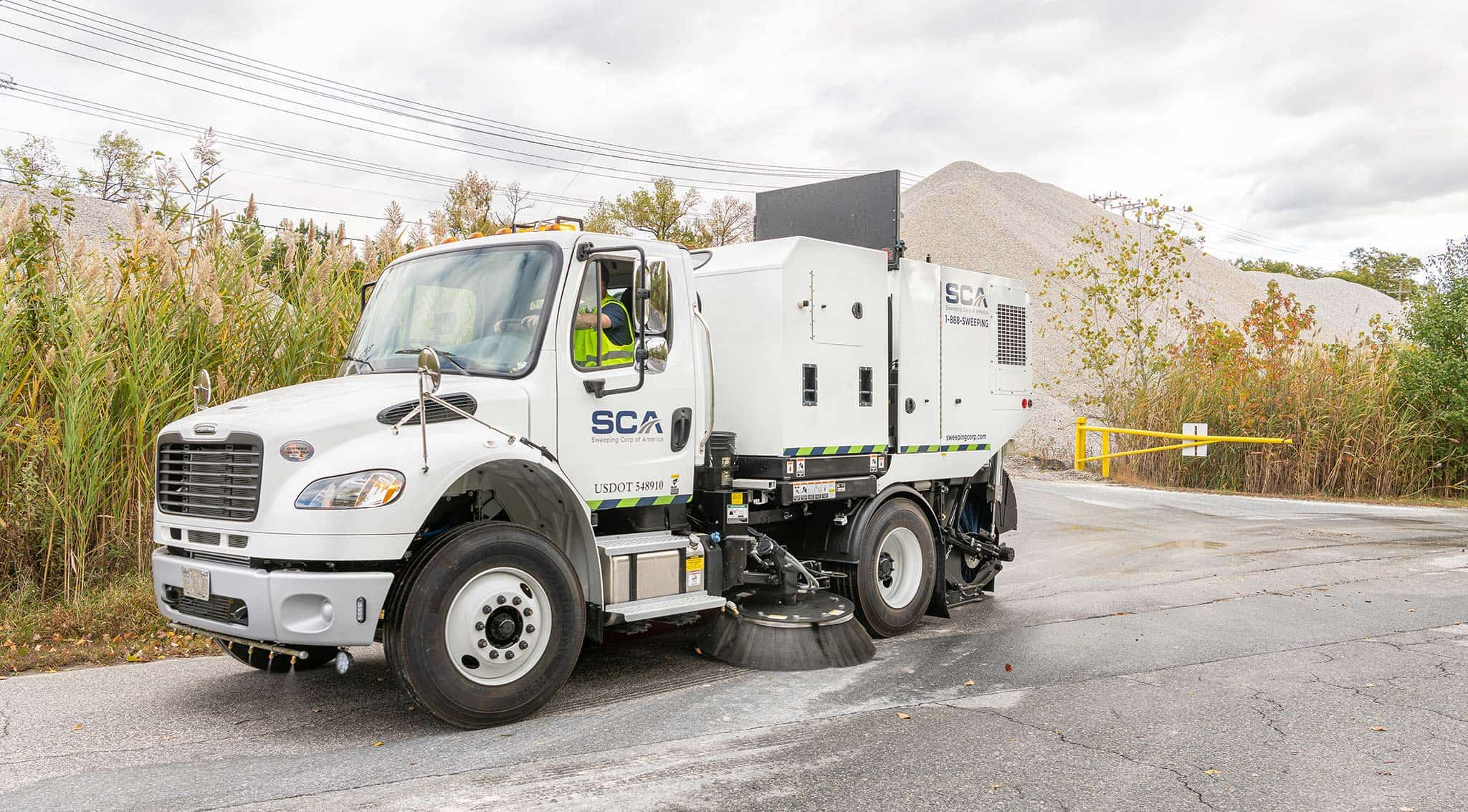
Pure vacuum sweepers create a powerful negative air pressure to suck up debris. They are incredibly effective on loose, lightweight materials like leaves, paper, and bottles in urban settings. Modern models often incorporate water spray systems for superior dust suppression. Their performance can be highly dependent on engine power and fan design.
Alternative and Compact Solutions
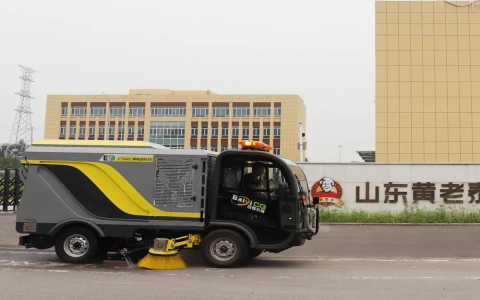
For smaller areas or specialized tasks, consider compact sweepers (often truck-mounted or standalone), elevator sweepers for industrial sites, or even advanced robotic units for sidewalks and pedestrian zones. The key is matching the tool to the task’s scale and debris profile.
Key Factors to Evaluate a Street Sweeper Manufacturer
Not all manufacturers are created equal. Beyond the brochure specs, these are the tangible factors that separate industry leaders from the rest.
- Build Quality & Durability: Inspect the chassis, hopper construction (look for high-strength, abrasion-resistant steel), and component sourcing. A sweeper is a rugged tool; it must withstand daily punishment. John Smith, a fleet maintenance supervisor with over 20 years of experience, notes: “The difference is in the details—weld quality, hydraulic line routing, and access panels. A well-built machine saves thousands in unscheduled downtime.”
- Technology & Innovation: Look for features like advanced filtration systems (HEPA filters for PM2.5 control), telematics for fleet management, efficient water recirculation systems, and operator-friendly control interfaces. Innovation should solve real-world problems, not just add complexity.
- Parts & Service Network: Global or national support is crucial. Ask about parts availability, dealer technician training, and average response times. A manufacturer is only as good as its support post-purchase.
- Customization Capability: Standard models don’t fit every need. Can the manufacturer tailor broom widths, hopper capacity, or control systems to your specific operation? This flexibility is a mark of a customer-centric provider.
- Total Cost of Ownership (TCO): Look beyond the sticker price. Calculate estimated fuel/water consumption, typical parts lifespan, and labor costs for routine maintenance. A slightly higher initial investment in a more efficient, durable unit often yields a lower TCO over 5-10 years.
Comparative Analysis: Leading Sweeper Technologies in Action
To make an informed choice, let’s compare the three main technologies side-by-side based on common operational criteria.

| Feature / Technology | Mechanical Broom | Regenerative Air | Vacuum |
|---|---|---|---|
| Best For Debris Type | Heavy, coarse (rocks, gravel, clay) | Fine to medium (sand, dust, small litter) | Light, loose (leaves, paper, cans) |
| Dust Control | Moderate (requires water spray) | Excellent (closed-loop air system) | Good (with water spray systems) |
| Pavement Surface | Rough, uneven, unpaved | Smooth, sealed asphalt/concrete | Smooth paved surfaces |
| Typical Fuel Efficiency | Moderate | High | Moderate to Low (high suction demand) |
| Maintenance Complexity | Relatively Simple | Moderate (air system expertise) | Moderate to High (fan, vacuum systems) |
The Rise of Global Manufacturing Hubs
The market for road cleaning equipment has become truly global. While established brands in North America and Europe have deep expertise, competitive and high-quality options are emerging from other manufacturing centers. For buyers focused on value-oriented procurement without sacrificing core performance, exploring these options is prudent.
For instance, manufacturers in Asia, particularly in China, have made significant strides in engineering, quality control, and adhering to international emission standards. A manufacturer like Chinese Truck Factory exemplifies this trend, offering a range of street sweepers that combine modern design with competitive pricing. Their units often incorporate standard features like efficient water spray systems and robust hoppers, making them a viable contender for municipal and industrial contracts worldwide. The key is to conduct thorough due diligence, request detailed specifications, and, if possible, arrange for a live demonstration or visit a reference site.
Future Trends in Street Sweeper Design
The industry is not static. Several powerful trends are shaping the next generation of road cleaning units, driven by sustainability mandates and technological advancement.
- Electrification & Alternative Fuels: Battery-electric sweepers are becoming more viable, offering zero tailpipe emissions and significantly lower noise for night operations in urban areas. Hybrid and CNG-powered models are also gaining traction to reduce carbon footprints and fuel costs.
- Autonomous & Semi-Autonomous Operation: While fully driverless street sweepers for complex public roads are still developing, automated guidance systems for controlled environments like airports, ports, and large industrial sites are already in use. These systems enhance precision and allow for 24/7 operation.
- Smart Connectivity & Data Analytics: Integrated telematics provide real-time data on route efficiency, fuel usage, maintenance alerts, and even debris collection rates. This data allows for optimized routing, predictive maintenance, and transparent reporting on service delivery. According to a 2022 report by the U.S. Department of Transportation, integrating smart technology into municipal fleets can improve asset utilization by up to 15%.
- Enhanced Environmental Focus: Beyond emissions, manufacturers are focusing on water recycling systems to minimize usage, advanced filtration to capture ultra-fine particulate matter (PM2.5 and below), and using more sustainable materials in construction.
Making the Final Decision: A Procurement Checklist
Use this actionable checklist to guide your evaluation and negotiation process with any street sweeper truck manufacturer.
- Define Your Needs: Document your primary debris types, total area to cover, required cleaning frequency, and any specific environmental regulations (noise, dust, emissions).
- Budget for TCO: Establish a budget that considers financing, operating costs (fuel, water, parts), and projected maintenance labor over a 7-10 year period.
- Request Detailed Specs & Demo: Never buy on paper alone. Insist on a demonstration under conditions that mimic your actual use case. Test the controls, noise levels, and pickup performance.
- Scrutinize the Warranty & Support: Understand exactly what is covered, for how long, and the process for warranty claims. Get clarity on local service support.
- Check References: Ask the manufacturer for contact information for 2-3 customers with similar operations. Ask them about reliability, support, and any hidden issues.
- Review the Fine Print: Have a legal or procurement expert review the sales contract, focusing on delivery terms, acceptance criteria, and liability clauses.
Frequently Asked Questions (FAQs)
Q: How often does a street sweeper require routine maintenance?
A: Maintenance intervals vary by model and technology. Typically, daily checks (fluid levels, broom wear) are needed. Major service intervals (engine, hydraulic systems) might range from 250 to 500 operating hours. Always follow the manufacturer’s specific maintenance schedule outlined in the manual to maximize lifespan.
Q: What is the average lifespan of a modern road cleaning unit?
A: With proper maintenance and reasonable operating conditions, a quality street sweeper can last 10 to 15 years. The longevity heavily depends on the chassis durability, corrosion protection, and how well major components like the engine, hydraulic pumps, and fan systems are maintained. Data from the Federal Highway Administration suggests well-maintained specialized municipal vehicles have an average service life of approximately 12 years.
Q: Can one sweeper type handle all jobs effectively?
A: Generally, no. This is a common pitfall. A mechanical sweeper is inefficient for fine dust on a parking lot, just as a regenerative air sweeper is not ideal for a muddy construction exit. Many operations benefit from a mixed fleet or choose a versatile model designed for multiple debris types, understanding there may be a performance compromise.
Q: How important is the operator in the performance of the machine?
A: Extremely important. A skilled operator who understands optimal speed, broom pressure, water flow, and suction settings can dramatically improve cleaning efficiency, reduce wear and tear, and lower operating costs. Investing in comprehensive operator training from the manufacturer is always recommended.
Q: Are there significant differences in emission standards for sweepers?
A: Yes. Emission regulations (like EPA Tier 4 Final in the U.S. or EU Stage V in Europe) govern diesel engine outputs. Ensure any sweeper you purchase complies with the regulations in your region of operation. This affects engine design, after-treatment systems, and sometimes the availability of certain models.
Sources & Further Reading:
- U.S. Department of Transportation. “Smart City Challenge: Lessons for Building Cities of the Future.” https://www.transportation.gov/
- Federal Highway Administration. “Asset Management Guide for Transportation Infrastructure.” https://www.fhwa.dot.gov/
- Interviews and insights from industry maintenance professionals and fleet managers.
Disclaimer: This article is based on the author’s professional experience and research. Specifications and technologies change. Always consult directly with manufacturers and conduct your own due diligence before making a purchasing decision. The mention of any specific manufacturer or website is for informational purposes and does not constitute an endorsement.