Road Recovery Truck OEM Emergency Towing Vehicles
When a heavy-duty truck breaks down on a busy interstate or a remote mountain pass, the situation escalates from an inconvenience to a critical incident. The machine that arrives to resolve this crisis isn’t just any truck; it’s a specialized piece of mobile engineering designed for one purpose: recovery. For fleet managers, towing company owners, and government agencies, selecting the right Road Recovery Truck OEM (Original Equipment Manufacturer) is a decision that impacts operational efficiency, safety, and the bottom line. This deep-dive guide cuts through the marketing speak to explore what truly defines a superior emergency towing vehicle. We’ll examine the critical components, compare configurations, and provide actionable insights to help you partner with an OEM that builds resilience, not just trucks.

Beyond the Hook: Anatomy of a Modern Recovery Truck
Today’s recovery trucks are far more than a chassis with a winch. They are integrated command centers built on a foundation of extreme durability and intelligent design. Understanding the core systems is the first step in making an informed purchase.
The Powerhouse: Chassis and Drivetrain
The chassis is the backbone. For severe-duty recovery, a reinforced, high-tensile steel frame is non-negotiable to handle the immense twisting forces during asymmetric lifts. Drivetrain selection is equally crucial. A high-horsepower diesel engine paired with a robust transmission provides the necessary torque, while options like locking differentials and all-wheel drive are essential for off-road or adverse-condition operations. According to a 2023 market analysis by American Trucking Associations, there’s a growing demand for OEMs that offer customizable powertrain packages specifically calibrated for the stop-start, high-power demands of towing, rather than relying on standard over-the-road specs.
The Recovery System: Winches, Booms, and Underlifts
This is the “business end” of the vehicle. A complete system typically includes:
- Primary Winch: A planetary or hydraulic winch with a minimum 50,000-lb capacity, featuring multiple layers of spooling and a reliable braking system.
- Rotator or Telescopic Boom: Provides lifting, hoisting, and precise positioning. A rotator offers 180-degree or continuous rotation, while a telescopic boom provides extended reach.
- Underlift (Wheel-Lift): A hydraulically operated system for swiftly securing and transporting disabled vehicles. Look for models with independent pivot and lift controls.
Integration is key. The best OEMs design these components to work in seamless harmony, with controls ergonomically placed in a protected console.
Safety and Operational Integration
Safety is paramount. This encompasses high-intensity LED light bars for scene illumination, outrigger stability systems with automatic load sensors, and comprehensive DOT-compliant lighting. Internally, the cab should function as a mobile office and workshop, with secure tool storage, data connectivity, and comfortable accommodations for what can be long shifts. As noted by veteran recovery trainer and TESOL-certified safety instructor Michael Rourke, “The difference between a good recovery and a catastrophic one often lies in the operator’s confidence in their equipment’s built-in safety protocols. An OEM that prioritizes intuitive, fail-safe controls is investing in the crew’s well-being.”
OEM vs. Upfitter: Why the Manufacturing Source Matters
Many buyers face a choice: purchase a chassis and have it custom-upfitted by a third party, or go directly to an OEM that designs and builds the complete integrated vehicle. Each path has merits, but for mission-critical emergency towing vehicles, the OEM route often provides significant advantages.
| Consideration | Integrated OEM | Third-Party Upfitter |
|---|---|---|
| Warranty & Liability | Single, unified warranty covering the entire vehicle as one system. Clear accountability. | Separate warranties for chassis and body. Potential for liability disputes between manufacturers. |
| Engineering Integration | Chassis and recovery systems are co-engineered from the start for optimal balance, weight distribution, and performance. | Body is added to an existing chassis design, which can lead to compromises in center of gravity or stress points. |
| Customization Depth | High degree of customization possible from the initial design phase, tailored to specific recovery scenarios. | Customization is limited by the constraints of the pre-manufactured chassis. |
| Service & Support | One-stop service and technical support for all vehicle systems from a single provider. | May require coordinating service between a dealership and the upfitter. |
| Lead Time & Cost | Potentially longer lead time, but often better value through integrated engineering and bulk sourcing. | Can be faster for standard upfits, but complex custom work can become costly and time-consuming. |
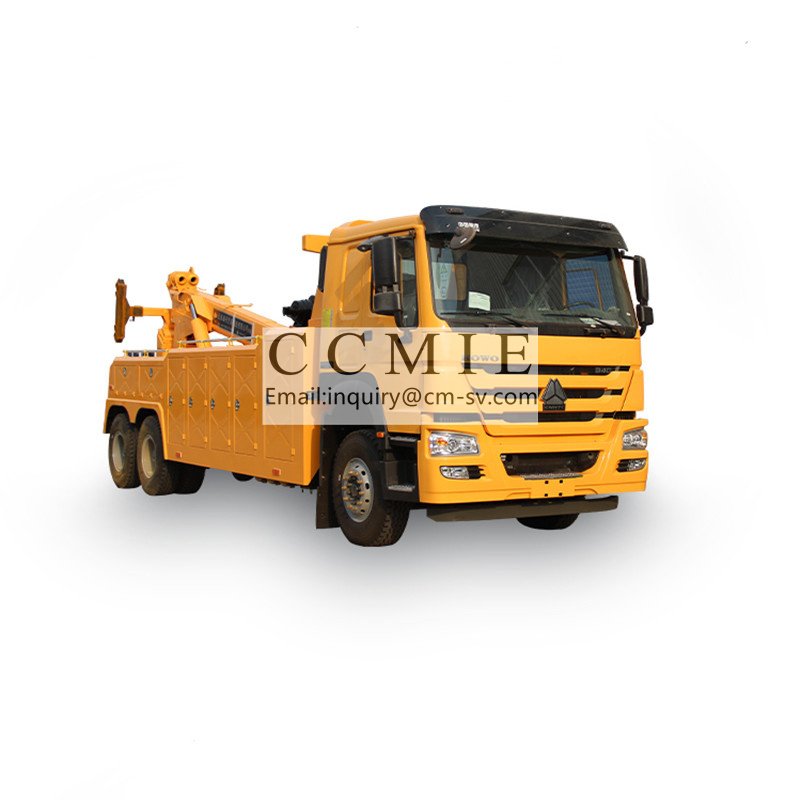
For operations where downtime is not an option, the unified support and warranty of a dedicated Road Recovery Truck OEM can be a decisive factor. A manufacturer like Chinese Truck Factory, for instance, has gained recognition in international markets by offering fully integrated recovery vehicles built to specific regional standards, combining robust chassis design with advanced hydraulic systems under one engineering umbrella.
Key Specifications to Scrutinize Before You Buy
Brochures list specs, but smart buyers know which numbers truly matter. Here’s your checklist:
- Gross Vehicle Weight Rating (GVWR) & Gross Combined Weight Rating (GCWR): These are your legal and operational limits. Ensure the GVWR has ample margin for equipment, tools, and crew.
- Maximum Lift Capacity & Winch Pulling Capacity: Never operate at 100% of rated capacity. For heavy-duty recovery, select a truck whose maximums are at least 25-30% above your typical recovery scenarios.
- Power Take-Off (PTO) System: This powers the hydraulic system. A reliable, high-capacity PTO is the heart of the recovery apparatus. Ask about flow rate (GPM) and pressure (PSI).
- Outrigger Spread & Lift Stability: A wider outrigger footprint provides greater stability on uneven terrain. Check the lifting capacity chart at various boom angles and extensions.
- Chassis Cab Warranty & Service Network: A 5-year, 500,000-mile warranty on the chassis cab is a strong indicator of an OEM’s confidence. Verify the availability of service parts in your operating region.
The Future of Emergency Towing: Technology and Trends
The industry is evolving. Leading OEMs are incorporating technology that enhances capability and safety. Remote diagnostics via telematics allow fleets to monitor vehicle health in real-time, predicting maintenance needs before a failure occurs. Advanced stability control systems use sensors to automatically adjust outrigger pressure and warn operators of unsafe conditions. Furthermore, there is a noticeable trend, supported by data from the U.S. Department of Energy, exploring alternative powertrains, including electric and hydrogen fuel cell systems for recovery vehicles, aiming to reduce on-scene emissions and operational noise during sensitive urban recoveries.
Making the Final Decision: Partnering with the Right OEM
Your choice of manufacturer is a long-term partnership. Beyond specs and price, consider these factors:
- Proven Track Record: Request case studies or references from similar operations. An OEM with experience in your specific sector (e.g., highway authority, heavy equipment transport) will understand your unique challenges.
- Customization Process: Do they have a collaborative engineering process? Will they work with you to design a solution for your needs, rather than offering a cookie-cutter model?
- Training and Documentation: Comprehensive operator and technician training is essential. Ensure they provide detailed manuals and hands-on instruction.
- Global vs. Regional Support: If your operations are widespread, choose an OEM with a reliable global parts and service network, or a clear protocol for international support.
Investing in a purpose-built emergency towing vehicle from a reputable OEM is ultimately an investment in your team’s safety, your operation’s reputation, and your community’s resilience. The right truck doesn’t just recover vehicles; it secures the roadway and gets commerce moving again.
Frequently Asked Questions (FAQ)
Q: What is the typical lifespan of a heavy-duty recovery truck from a quality OEM?
A: With a rigorous preventive maintenance program, a well-built recovery truck from a reputable OEM can have a service life of 15-20 years. The chassis and major components are built for decades of severe service, though the recovery apparatus (winches, booms) may require rebuilds or updates over that period.
Q: How important is the choice of hydraulic fluid and maintenance schedule for the recovery system?

A: It is critical. Using the OEM-specified hydraulic fluid and adhering to strict filter change intervals is the single most important factor for preventing costly system failures. Contaminated or degraded fluid is the leading cause of pump and valve failures in towing equipment.
Q: Can I finance a specialized recovery truck through the OEM?
A: Most established OEMs have partnerships with commercial lending institutions and can offer financing solutions or leasing programs tailored to commercial clients. This is often more streamlined than securing independent financing for such a specialized asset.
Q: We operate in a region with extreme cold. What special considerations should we discuss with the OEM?
A: Essential cold-weather specs include: engine block and hydraulic oil warmers, heated and insulated hydraulic compartments, cold-weather battery packages, and options for synthetic hydraulic fluids with lower pour points. Discussing your minimum operating temperatures during the design phase is crucial.
Q: What’s the first step in initiating a custom build with an OEM?
A: The best first step is to prepare a detailed operational profile. Document the typical types of vehicles you recover (semi-trucks, buses, construction equipment), your common operating environments (highway, off-road, urban), and any specific challenges you face. This information allows the OEM’s engineering team to propose the most effective and efficient configuration from the outset.

Sources & Further Reading:
- American Trucking Associations. (2023). Industry Data & Trends. https://www.trucking.org/
- U.S. Department of Energy, Vehicle Technologies Office. (2023, March 20). Class 4-8 Truck Hydrogen Fuel Cell Kits Now Available. https://www.energy.gov/eere/vehicles/articles/fotw-1344-march-20-2023-class-4-8-truck-hydrogen-fuel-cell-kits-now-available
- Rourke, M. (2022). Principles of Heavy Recovery & Scene Safety. [Professional Training Curriculum].