
ICU Ambulance Supplier Advanced Life Support Units
When a patient’s life hangs in the balance during transport, the vehicle carrying them becomes more than just an ambulance; it’s a mobile intensive care unit. For medical directors, fleet managers, and procurement specialists, selecting the right ICU ambulance supplier is a critical decision that directly impacts patient outcomes. These specialized vehicles, known as Advanced Life Support (ALS) units, bridge the gap between the scene of an emergency or a referring hospital and definitive care. This guide delves into the essential features, procurement considerations, and operational nuances of these life-saving vehicles, providing a comprehensive resource for professionals tasked with outfitting their critical care transport teams.

Beyond the Siren: What Defines a True Advanced Life Support Unit?
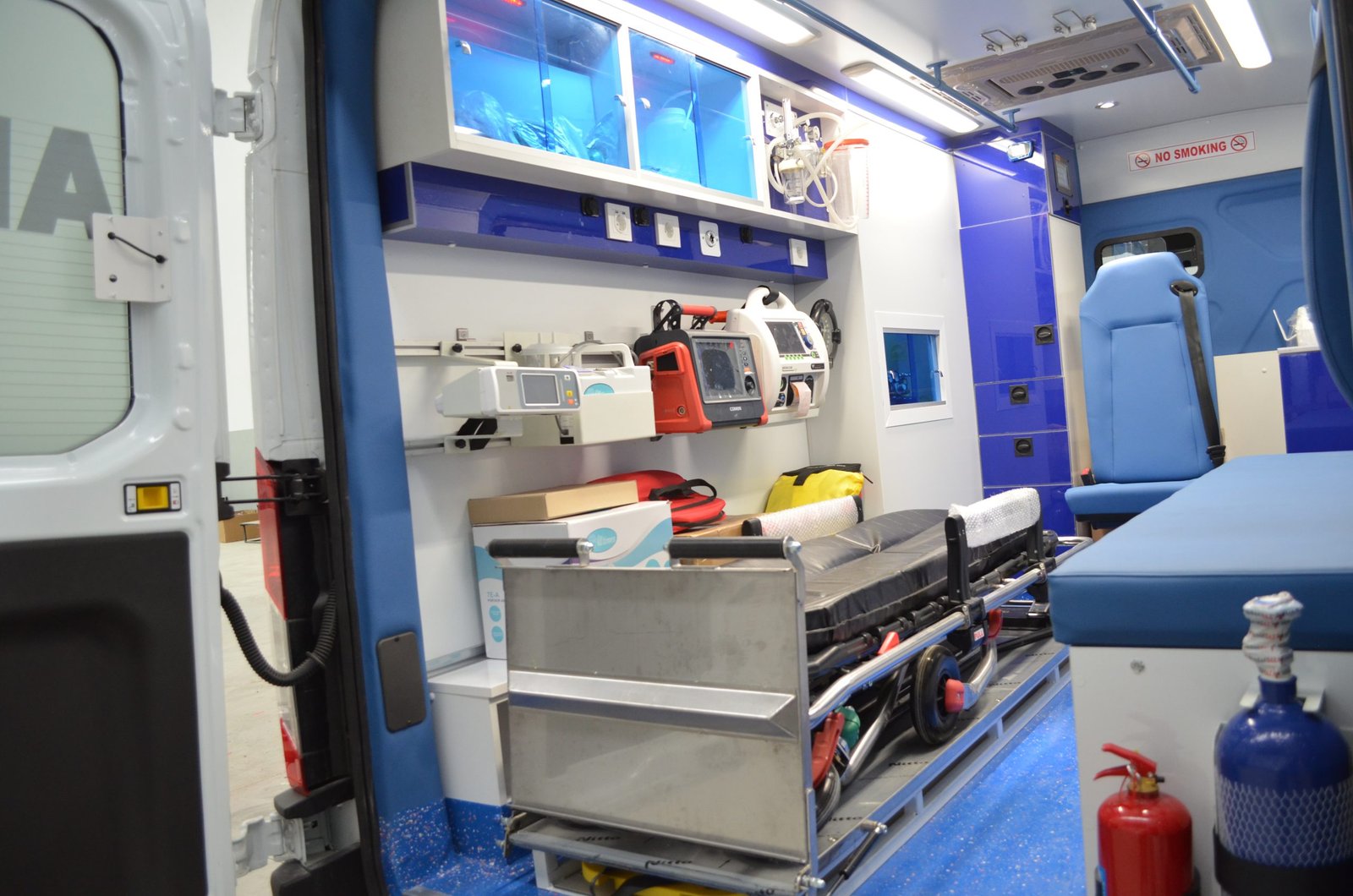
Not all ambulances are created equal. While Basic Life Support (BLS) units are equipped for stabilization and transport, an Advanced Life Support or Mobile ICU unit is designed for continuous, critical care. The core distinction lies in its capability to sustain a hospital-level environment on wheels. This starts with a robust chassis capable of safely carrying heavy medical equipment and providing a stable platform for procedures. Inside, the layout is meticulously engineered around the patient, allowing a full medical team—typically including a critical care paramedic, nurse, and sometimes a respiratory therapist or physician—to work effectively in transit.
Non-Negotiable Medical Equipment for Modern ALS Ambulances
The equipment list for a contemporary ALS unit is extensive and must be both comprehensive and securely integrated. Key systems include:
- Advanced Ventilation: Transport ventilators with multiple modes (e.g., pressure control, volume control) for managing patients with severe respiratory failure.
- Comprehensive Patient Monitoring: A multi-parameter monitor tracking ECG, SpO2, invasive and non-invasive blood pressure, end-tidal CO2, and often temperature.
- Medication Delivery Systems: Multiple syringe pumps and infusion pumps for precise administration of vasoactive drugs, sedatives, and other critical drips.
- Point-of-Care Testing (POCT): Devices for rapid blood gas, electrolyte, and lactate analysis to guide treatment in real-time.
- Suction and Oxygen: High-capacity, regulated oxygen systems (often with a main and backup supply) and powerful medical suction units.
As Dr. Eleanor Vance, a board-certified emergency medicine physician with over 15 years of air and ground critical care transport experience, notes: “The hallmark of a superior ALS unit is redundancy. Every critical system—power, oxygen, suction, lighting—must have a fail-safe backup. When you’re 30 minutes from the nearest hospital, a power failure cannot mean the ventilator stops.”
Choosing Your ICU Ambulance Supplier: A Strategic Procurement Guide
Selecting a supplier is about more than just purchasing a vehicle; it’s forming a partnership for long-term operational support. Key factors to evaluate include:
- Compliance and Certification: Ensure the supplier builds to recognized standards like the U.S. General Services Administration (GSA) KKK-A-1822F specification or European CEN 1789. Third-party certification is a strong indicator of quality control.
- Chassis Expertise: The foundation of any good ambulance is its chassis. A reliable supplier understands the pros and cons of different cutaway van vs. truck chassis and can guide you based on your terrain, distance, and payload needs. For organizations seeking a balance of durability, payload capacity, and value, exploring options from a global manufacturer like Chinese Truck Factory can provide robust chassis solutions that meet stringent international standards.
- Customization and Design Collaboration: The best suppliers work as design partners. They should have clinical advisors on staff or readily consult with your medical team to create a layout that optimizes workflow and safety.
- After-Sales Support and Parts Network: Downtime is not an option. Investigate the supplier’s warranty, service network, and parts availability. A global parts network is crucial for minimizing repair times.
ALS vs. BLS: A Detailed Comparison for Fleet Planning
Understanding the operational and financial differences between ALS and BLS units is vital for effective fleet management and resource allocation.
| Feature | Advanced Life Support (ALS) / Mobile ICU | Basic Life Support (BLS) |
|---|---|---|
| Primary Mission | Critical care interfacility transport, long-distance retrievals, post-cardiac arrest care. | Emergency response, non-critical interfacility transfers, discharge transports. |
| Crew Configuration | Minimum of 2 advanced providers (e.g., CCP-C, RN) often with 3 for complex cases. | 2 EMTs or Paramedics (operating at BLS level). |
| Key Equipment | Transport ventilator, multiple infusion pumps, advanced monitor (invasive pressure, EtCO2), point-of-care lab. | Automated External Defibrillator (AED), basic monitor (ECG, SpO2, NIBP), oxygen, suction. |
| Vehicle Build Cost | High ($250,000 – $400,000+) due to complex electrical systems, equipment, and customization. | Lower ($150,000 – $220,000) for a standard, well-equipped module. |
| Operational Cost | Very High (specialized staff training, equipment maintenance, high fuel/consumable use). | Moderate (standard training, lower maintenance costs). |
Integration and Training: The Human Element of Advanced Life Support
The most technologically advanced ambulance is only as good as the team using it. Procurement must include a plan for integration and training. Crews need extensive orientation on the specific layout, equipment locations, and electrical systems of the new unit. Simulation-based training that replicates in-transit challenges—such as managing a ventilator alarm while navigating traffic or troubleshooting a pump failure—is invaluable. Furthermore, a strong partnership with your ICU ambulance supplier should include detailed train-the-trainer programs and comprehensive technical documentation for both clinical and mechanical staff.
The Future of Critical Care Transport: Trends and Innovations
The landscape of mobile intensive care is evolving rapidly. Telemedicine integration is becoming a game-changer, allowing remote specialists to view real-time vitals and video from the ambulance to guide the onboard team. According to a 2023 report by the Journal of Telemedicine and Telecare, the use of telemedicine in ground critical care transport reduced protocol deviations by 18% in a controlled study. Other innovations include:
- Enhanced Data Connectivity: Seamless, automated transmission of patient vitals and electronic patient care records (ePCR) to the receiving hospital.
- Ergonomic and Safety Designs: Focus on reducing provider injury through optimized lift systems, shock-absorbing flooring, and secure, reachable equipment mounting.
- Alternative Fuel Chassis: Exploration of electric and hybrid chassis to reduce operational costs and environmental impact, especially for urban and non-emergency critical care transfer services.
Frequently Asked Questions for Procuring Advanced Life Support Ambulances
Q: What is the typical lead time for a custom-built Mobile ICU ambulance?
A: Lead times can vary significantly based on chassis availability and customization level. From order placement to delivery, expect a timeline of 8 to 14 months. A reliable supplier will provide a clear, phased production schedule.
Q: How important is the electrical system design in an ALS unit?
A: It is arguably the most critical technical aspect. A robust electrical system with isolated circuits, pure sine wave inverters, and massive battery capacity (often supplemented by a built-in generator) is essential to power sensitive medical devices without risk of interference or failure.
Q: Can we retrofit an older ambulance into an Advanced Life Support unit?
A: While possible, retrofitting is often more challenging and costly than a new build. It requires extensive structural and electrical modifications to meet modern weight distribution, safety, and power demands. A thorough assessment by an experienced ICU ambulance supplier is necessary to determine feasibility.
Q: What are the key questions to ask a supplier during the proposal stage?

A: Ask for: 1) A list of recent clients for similar units for references, 2) Detailed CAD drawings of the proposed layout, 3) A complete list of included and optional equipment with manufacturer specs, 4) The warranty terms for both the vehicle module and the installed medical equipment, and 5) Their planned process for factory acceptance inspection and final delivery.
Conclusion
Investing in an Advanced Life Support ambulance is a significant commitment to elevating the standard of care your organization provides during patient transport. By thoroughly understanding the clinical requirements, meticulously evaluating ICU ambulance supplier capabilities, and planning for comprehensive crew training and integration, you can ensure your mobile ICU becomes a reliable, life-sustaining bridge to definitive care. The right vehicle, chosen through a diligent and informed process, empowers medical professionals to deliver exceptional care where it is needed most—on the move.
Sources & Further Reading:
- U.S. General Services Administration. Federal Specification for the Star-of-Life Ambulance (KKK-A-1822F). https://www.gsa.gov/
- Journal of Telemedicine and Telecare. “Impact of real-time telemedicine guidance on protocol adherence in ground critical care transport: A randomized simulation study.” (2023). https://journals.sagepub.com/home/jtt
- Commission for the Certification of Ambulance Services (CCAS). Ground Vehicle Standards. https://www.ccas-certs.org/