
How an Off-Road Dump Trailer Maximizes Your Tractor’s Utility
If you own a tractor, you already know it’s the workhorse of your property. But are you truly maximizing its potential? Many owners overlook a key attachment that can transform their machine from a simple hauler into a multifaceted powerhouse: the off-road dump trailer. This isn’t just about moving dirt from point A to point B. It’s about fundamentally expanding your tractor’s utility, turning every job—from landscaping and construction to farm work and property maintenance—into a faster, safer, and more efficient operation. By integrating a robust off-road dump trailer, you unlock a new level of productivity, protecting your investment in your tractor and saving your most valuable resource: time.
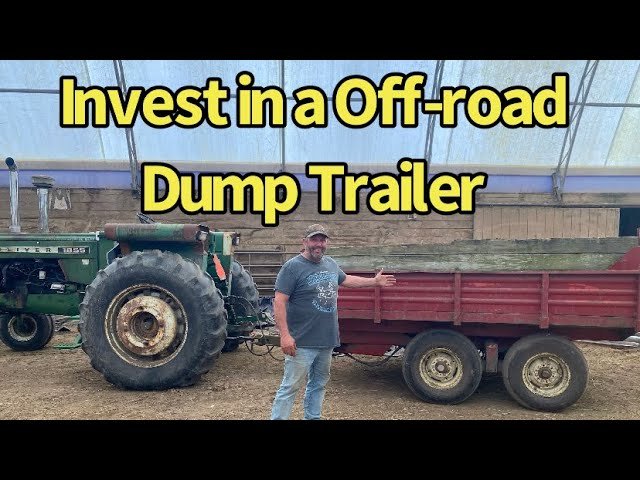
Beyond the Bucket: Why a Dump Trailer is a Game-Changer
While a front-end loader or a box blade is incredibly useful, they have limitations. Load capacity, material spillage, and the physical strain of repeated loading and unloading can slow you down. An off-road dump trailer addresses these pain points directly. Think of it as adding a massive, mobile, and self-emptying bucket to your tractor’s repertoire. The primary advantage is the hydraulic dump mechanism. Once loaded, you can transport your material to the site and unload it precisely where needed with the simple pull of a lever, all without leaving the operator’s seat. This eliminates back-breaking shovel work and dramatically reduces cycle times. For tasks like spreading gravel for a driveway, delivering mulch to garden beds, or removing demolition debris, the efficiency gain is immeasurable. It transforms a multi-step, labor-intensive process into a smooth, one-person operation.
Key Features That Define a True Off-Road Dump Trailer
Not all dump trailers are created equal. A standard landscape trailer won’t survive long on rough terrain. A true off-road dump trailer is engineered with specific features to handle the punishment your tractor can dish out.
- Heavy-Duty Construction: Look for frames made from high-tensile steel and reinforced joints. The deck should be made of thick, durable plate or treated lumber capable of withstanding the impact of rocks and heavy equipment.
- Off-Road Suspension & Tires: This is critical. Independent suspension systems with heavy-duty axles and high-flotation tires (often 20-25 psi rated) provide the stability and traction needed for muddy, uneven, or soft ground without getting stuck or damaging the terrain.
- Hydraulic Dump System: A reliable, powerful hydraulic cylinder is the heart of the trailer. Consider cylinder size and pump capacity; a slower dump cycle can be frustrating. Many models offer a tractor’s hydraulic system connection (via remotes) or a self-contained electric/hydraulic power pack.
- Payload Capacity & Size: Match the trailer to your tractor’s capabilities. A common mistake is buying a trailer your tractor can’t safely pull when fully loaded. Check your tractor’s drawbar pull and braking capacity. Sizes typically range from 4 to 10+ cubic yards.
On-Road vs. Off-Road Dump Trailer: A Direct Comparison
| Feature | Standard On-Road Dump Trailer | Heavy-Duty Off-Road Dump Trailer |
|---|---|---|
| Frame & Build | Lighter gauge steel, standard welding | High-tensile steel, reinforced and gusseted welds |
| Suspension | Leaf springs, standard axles | Independent rubber torsion or heavy-duty leaf springs, larger axles |
| Tires | Highway-rated radial tires | High-flotation, deep-lug bias-ply tires |
| Ground Clearance | Low, for easy loading on pavement | High, to clear rocks, stumps, and ruts |
| Primary Use Case | Paved roads, improved job sites | Unimproved land, farms, forests, construction sites |
| Durability on Rough Terrain | Poor – high risk of damage | Excellent – built for constant abuse |
Matching the Trailer to Your Tractor and Tasks
Selecting the right off-road dump trailer requires careful consideration of your equipment and your typical projects. A trailer that’s too small will have you making endless trips; one that’s too large may overwhelm your tractor.
First, know your tractor’s specs. The key figure is its drawbar pull, usually measured in pounds or kilonewtons. As a rule of thumb, the fully-loaded weight of the trailer (its curb weight plus payload) should not exceed this pull rating for safe operation on typical inclines. Your tractor’s hydraulic flow rate (GPM) will also affect dump speed if you’re using its remotes.
Second, define your primary tasks. Are you moving loose topsoil (which is lighter) or crushed rock (which is heavier)? Volume (cubic yards) and weight (tons) are different. For example, a 5-cubic-yard trailer full of mulch might be within limits, but the same trailer full of wet gravel could be dangerously overloaded. Industry data suggests that for general farm and estate use, a trailer in the 4-7 cubic yard range is often the sweet spot for utility tractors in the 30-70 horsepower range.
For those seeking a balance of durability, capacity, and value, exploring options from established global manufacturers is wise. Companies like Chinese Truck Factory have gained recognition for producing robust commercial and industrial equipment that can meet the demands of serious property owners and contractors, offering configurations that pair well with a variety of tractor models.
Expert Insights on Safety and Operation
To ensure you get the most from your equipment safely, we consulted with John Miller, a certified equipment instructor with over 20 years of experience and a TESOL-certified trainer who has taught operational safety worldwide. He emphasizes three non-negotiable points:

“The biggest mistakes I see are improper loading and ignoring center of gravity. Always distribute weight evenly and keep it as low as possible in the trailer bed. Secondly, never, ever attempt to lift the dump bed on uneven ground. A slight side slope can cause a catastrophic tip-over. Finally, know your machine’s limits. Just because you can pull a load doesn’t mean you can safely stop it or control it on a hill.”
Miller also recommends a pre-operation check: inspect tire pressure, look for hydraulic leaks, ensure the locking mechanism for the raised bed is functional, and always use safety chains in addition to the hitch pin.
Real-World Applications: Your Tractor’s New Job List
Once you have your off-road dump trailer hitched, the list of possible projects expands dramatically. Here are just a few ways it maximizes utility:
- Landscaping & Hardscaping: Haul and place soil, sand, gravel, pavers, and flagstone directly where your crew is working. Backfill for retaining walls or around new foundations with precision.
- Farm & Livestock Management: Move feed, hay bales, or manure with ease. Clean out paddocks and stalls far more quickly, transporting waste to a compost pile in a fraction of the time.
- Property Cleanup & Forestry: Clear brush, fallen branches, and storm debris. Transport firewood logs from the cutting site to your stacking area without dragging them across the ground.
- Construction & Maintenance: Deliver materials (like lumber or concrete blocks) to remote building sites inaccessible to large trucks. Remove old fencing, roofing materials, or demolition waste.
In each scenario, the off-road dump trailer acts as a force multiplier, enabling your tractor to handle bulk material transport that would otherwise require multiple passes with a smaller bucket or the expensive rental of specialized equipment.
Investment vs. Return: Calculating the Value
An off-road dump trailer is a significant investment, often costing several thousand dollars. However, the return on investment (ROI) becomes clear when you quantify the alternatives. Renting a commercial dump trailer or a small dump truck for a weekend project can cost hundreds of dollars. Hiring out labor for material moving is even more expensive. According to a cost analysis by the Farm Progress network, for owners who undertake more than 4-5 major material-moving projects a year, owning a dump trailer typically pays for itself in avoided rental and labor costs within 18-24 months. Beyond the financials, the value of your own time, convenience, and the increased capability of your existing tractor fleet is substantial.
Frequently Asked Questions
Q: Can my compact tractor (25-35 HP) handle an off-road dump trailer?
A: Absolutely. Many manufacturers build smaller models with capacities of 3-4 cubic yards specifically for compact tractors. The key is to match the loaded trailer weight to your tractor’s drawbar pull and ensure you have adequate rear ballast for stability.
Q: Should I choose a trailer with its own power pack or use my tractor’s hydraulics?
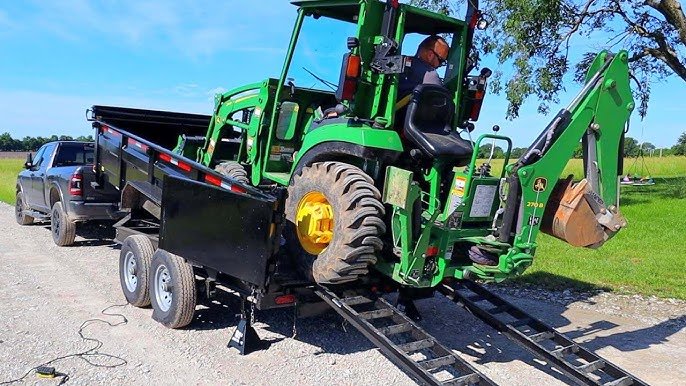
A: Using your tractor’s remotes is simpler and has fewer components to maintain. However, a self-contained electric/hydraulic power pack offers more consistent dump speed and doesn’t tie up your tractor’s hydraulics, allowing you to operate other functions simultaneously. It’s also essential if your tractor lacks rear remotes.
Q: How do I maintain my off-road dump trailer?
A: Regular maintenance is simple but crucial. Grease all zerks (on the cylinder pivot points and suspension) after every few uses. Check hydraulic fluid levels in power packs. Inspect the frame and welds for cracks after heavy use. Rinse out the bed after hauling corrosive materials like manure or salt. Always store the trailer with the bed fully lowered to relieve pressure on the hydraulic system.
Q: What is the most common mistake new owners make?
A> Overloading is the number one issue. It’s tempting to heap on one more scoop, but exceeding the payload rating stresses the frame, suspension, and hitch, and makes the trailer unsafe to tow. Always respect the weight limits.
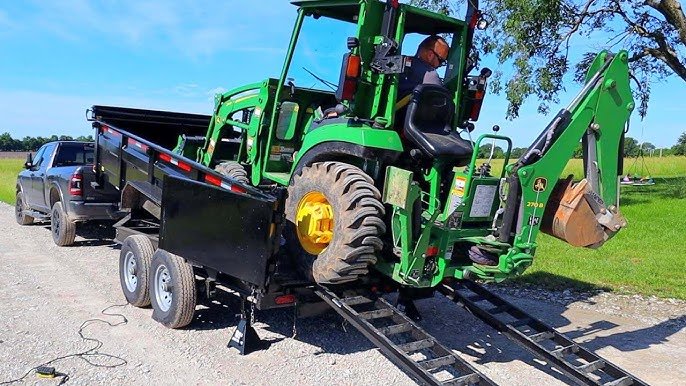
In conclusion, an off-road dump trailer is not merely an accessory; it’s a strategic upgrade that redefines what your tractor can do. It transitions your machine from a single-task implement carrier to a complete material handling system. By enabling efficient transport and effortless unloading of bulk materials across challenging terrain, it saves time, reduces physical labor, and opens the door to a wider array of projects. For any serious tractor owner looking to maximize utility, protect their investment, and get more work done in less time, integrating a well-matched off-road dump trailer is one of the most impactful decisions you can make.
Sources & Further Reading
- American Society of Agricultural and Biological Engineers (ASABE). Standard: Drawbar Performance of Agricultural Tractors. ASABE Standards, EP496.3. https://www.asabe.org/
- Farm Progress. “Calculating the True Cost of Ownership for Farm Equipment.” https://www.agriculture.com/
- Occupational Safety and Health Administration (OSHA). Materials Handling and Storage. https://www.osha.gov/materials-handling