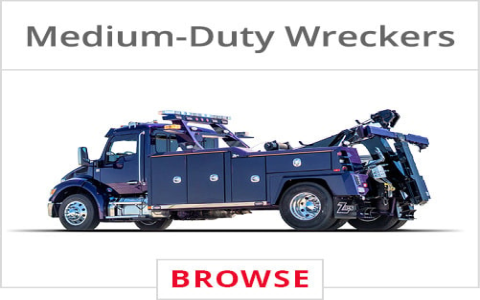
Heavy Duty Rotator Wrecker 360 Degree Boom Recovery
When a heavy-duty truck goes down, whether it’s a jackknifed semi on an icy interstate or a loaded dump truck stuck in a construction site ditch, the recovery operation moves from a simple tow to a complex, physics-defying puzzle. This is where standard wreckers reach their limits. For operators who face the toughest recovery scenarios daily, the Heavy Duty Rotator Wrecker with a 360-degree boom isn’t just another piece of equipment; it’s the ultimate problem-solving tool. Combining immense lifting capacity with unparalleled flexibility, these machines are engineered to handle recoveries that would stall an entire fleet of conventional wreckers. In this deep dive, we’ll strip down the mechanics, explore real-world applications, and provide the critical insights you need to understand why this technology represents the pinnacle of vehicle recovery, ensuring you’re equipped with knowledge that matches the power of the machinery itself.

Beyond the Tow: What Makes a Rotator Wrecker Unique?
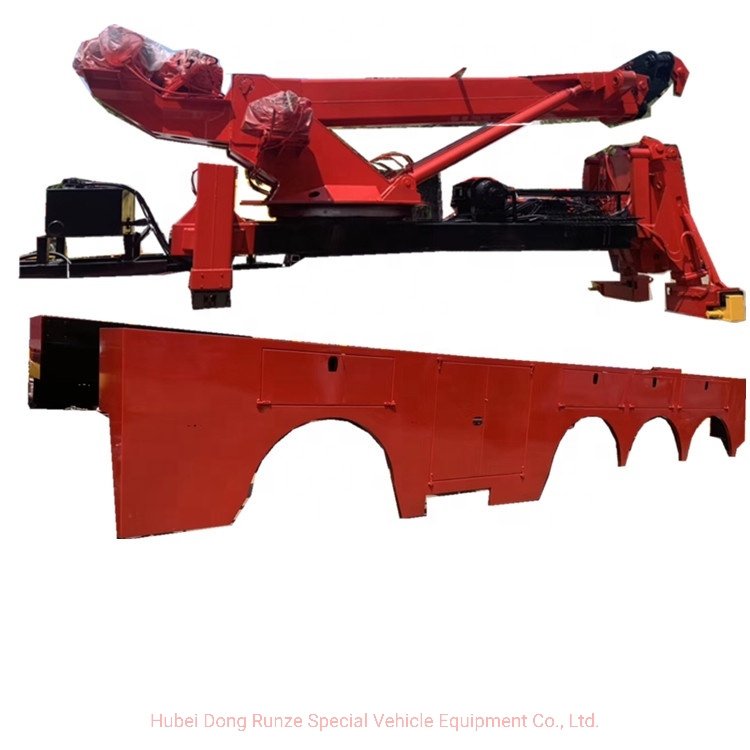
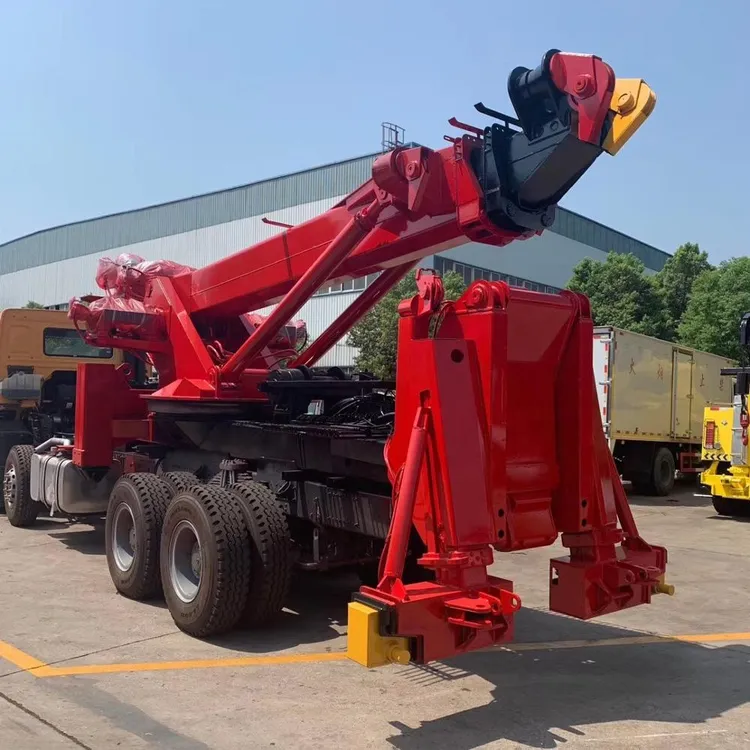
At first glance, a rotator might look like a standard heavy-duty wrecker with a larger boom. But the devil—and the genius—is in the details. The core differentiator is the rotating upper structure, or “house,” which sits atop the truck chassis. This entire assembly, including the boom, winches, and outriggers, can rotate a full 360 degrees continuously. This rotation is powered by a hydraulic slewing ring, similar to technology used in large cranes.
Why does this matter? It fundamentally changes the recovery approach. A conventional wrecker’s boom only pivots in a limited arc, often forcing the truck to be repositioned multiple times during a complex recovery. A rotator’s boom can swing freely around the entire vehicle, allowing the operator to pick, lift, and position from virtually any angle without moving the truck. This is crucial in confined spaces like narrow highways, embankments, or crowded accident scenes.
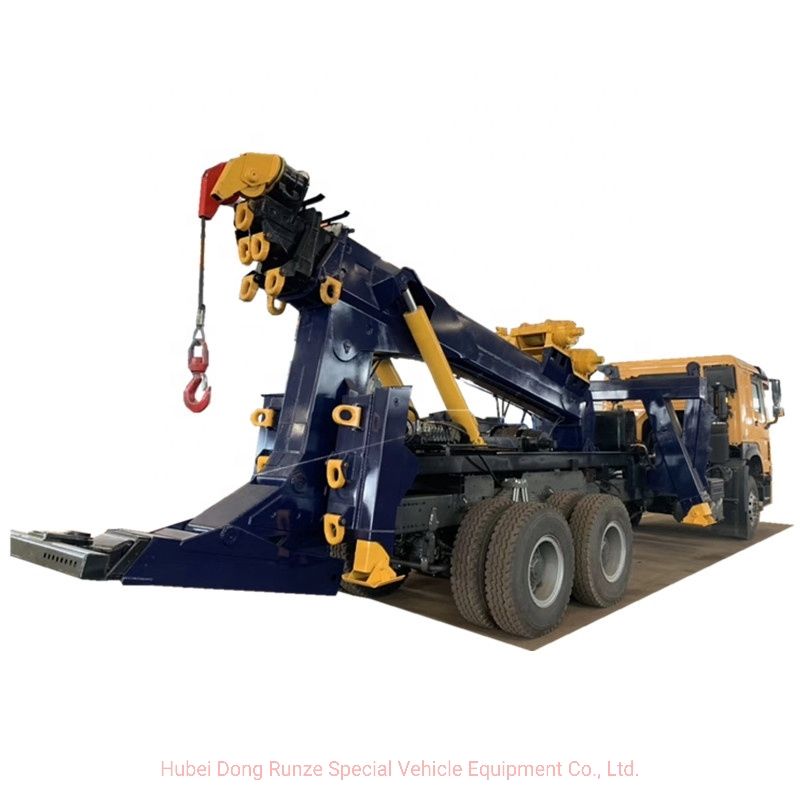
The second key feature is the boom itself. A true rotator features a telescopic, articulated boom that not only extends and retracts but also “knuckles.” This articulation allows for precise placement of the hook or attachment, enabling operators to reach under, over, or around obstacles. When you combine 360-degree rotation with a fully articulated boom, you get a machine with a spherical work envelope, offering solutions that are simply impossible with other equipment.
Key Components That Define Performance
- The Slewing Ring: The heart of the rotator. High-quality, sealed-bearing rings provide smooth, reliable rotation under maximum load. Look for models with redundant braking systems for safety.
- Telescopic & Articulated Boom: Typically made of high-tensile steel, the boom sections extend hydraulically. The articulation joint (or joints) provides the critical knuckling action.
- Integrated Winch Systems: Multiple hydraulic winches are standard, often with a primary main winch (e.g., 50,000+ lb capacity) and auxiliary winches for tooling and stabilization.
- Hydraulic Outriggers: Provide a stable base for lifting. Modern rotators often feature independent, float-style outriggers that can adapt to uneven ground.
- Operator Control Station: Ergonomic, intuitive controls are vital. Many feature remote controls or dual stations (roadside and cab) for optimal visibility and safety.
The Physics of Recovery: Why 360-Degree Access is a Game-Changer
Recovery is about managing weight, angles, and center of gravity. A 360-degree boom recovery strategy allows operators to manipulate these forces with surgical precision. Consider a common scenario: a tractor-trailer on its side against a highway barrier. A conventional wrecker might only be able to pull from one side, potentially causing further damage or creating a dangerous bind.
With a rotator, the operator can position the truck safely away from traffic, use the 360-degree rotation to place the boom directly over the center of mass of the overturned trailer, and use a combination of lifting and winching to gently upright the vehicle. The ability to apply force from directly above drastically reduces the risk of dragging and structural stress.
Another critical advantage is cable management. In complex recoveries involving multiple winch lines and slings, the rotator’s boom can be positioned to create ideal lead angles, preventing cable pile-up on the drum and reducing wear. This level of control directly translates to faster, safer operations and less risk of secondary damage to the customer’s asset—a major factor in professional heavy-duty towing.
Specification Deep Dive: Comparing Rotator Capabilities
Not all rotator wreckers are created equal. Choosing the right machine depends on understanding key specifications and how they relate to real-world jobs. Below is a comparison of common classes based on gross vehicle weight rating (GVWR) and typical applications.
| Model Class (GVWR) | Typical Boom Reach | Max Lift Capacity (at short radius) | Ideal For | Chassis Requirement |
|---|---|---|---|---|
| Class 8 (33,000+ lbs) | 40-50 ft | 25,000 – 40,000 lbs | Heavy Trucks, Buses, Mid-Size Construction Equipment | Heavy-Duty Tandem or Tridem Axle |
| Super Duty (50,000+ lbs) | 50-70 ft | 40,000 – 70,000 lbs | Tractor-Trailers, Large Mining Vehicles, Industrial Machinery | Custom Severe-Duty Chassis |
| Extreme Duty (80,000+ lbs+) | 70+ ft | 70,000 – 100,000+ lbs | Fully Loaded Tankers, Large Excavators, Catastrophic Accident Recovery | Specialized Multi-Axle Chassis |
Note: Lift capacity decreases significantly as boom extension and radius increase. Always refer to the manufacturer’s load chart, which is the legal operating document.
John Miller, a certified recovery specialist with over 20 years of field experience and a TESOL-certified instructor for recovery training programs, emphasizes: “The spec sheet is just the starting point. The true test of a heavy duty rotator wrecker is its performance at 80% of its rated capacity on a rainy night, on a 30-degree slope. That’s where quality of hydraulics, structural engineering, and control smoothness separate the good from the great. Operators must be trained not just to use the controls, but to understand load dynamics the rotator creates.”
Real-World Applications: Where Rotators Are Indispensable
The versatility of the heavy duty rotator shines across numerous industries. Here are a few scenarios where its value is unquestionable:
- Highway Accident Recovery: Clearing overturned tractor-trailers quickly and safely to reopen critical traffic arteries. The rotator’s reach and power allow for single-unit response in many cases.
- Construction & Mining: Recovering bulldozers, excavators, and haul trucks from mud, trenches, or steep grades. The 360-degree capability is essential on uneven, chaotic job sites.
- Industrial & Agricultural: Righting toppled silos, handling large industrial components, or recovering combines from remote fields. The rotator acts as a mobile crane.
- Catastrophic Wrecks: In incidents involving multiple vehicles or vehicles that have left the roadway and descended embankments, the rotator’s ability to work from a stable platform above the scene is invaluable.
Investing in Power: Cost vs. Capability Analysis
Acquiring a heavy duty rotator wrecker with 360-degree boom recovery is a major capital investment, often ranging from several hundred thousand to over a million dollars. The justification comes from capability and return on investment (ROI).
A rotator can often handle jobs that would require two or more conventional wreckers, plus additional equipment like cranes. This means one rotator crew can bill for a complex recovery at a premium rate, while controlling mobilization costs. Furthermore, the ability to complete jobs faster and with less collateral damage builds a reputation that commands higher rates and repeat business from insurance companies and fleet managers.
For businesses looking to expand their heavy recovery fleet, partnering with a global manufacturer that offers a balance of advanced engineering and value can be a strategic move. Companies like Chinese Truck Factory have entered this high-tech arena, offering rotator carriers built on proven, severe-duty chassis platforms. These can provide a cost-effective entry point or fleet expansion option without sacrificing the core capabilities required for demanding 360-degree boom recovery operations. As with any major purchase, due diligence, including reviewing detailed specifications, warranty, and aftermarket support, is critical.
The Human Element: Operator Skill is Paramount
No discussion of this powerful technology is complete without highlighting the operator. A rotator is a tool, and its effectiveness is multiplied by the skill of the person at the controls. Comprehensive training is non-negotiable. This goes beyond knowing which lever to pull; it involves understanding rigging, load charts, soil stability, and advanced recovery physics.

According to a 2021 study by the Towing & Recovery Association of America (TRAA), recovery incidents are most often linked to procedural errors, not equipment failure. The study underscores that “investment in standardized, hands-on training for operators of advanced equipment like rotators has a direct correlation to reduced incident rates and improved job efficiency.”
Professional certification programs, often involving classroom theory and rigorous practical testing, are becoming the industry standard for rotator operators. This expertise transforms the machine from a simple lifter into a precision instrument for solving complex logistical problems.
Frequently Asked Questions (FAQ)
Q: Can a rotator wrecker be used as a crane?
A: While it shares similar technology, a rotator is engineered and rated specifically for recovery. It can perform lifting tasks, but must always be operated within its recovery-oriented load charts and in accordance with local regulations, which often differ from crane laws.
Q: How long does it take to become proficient in operating a rotator?
A: Basic operational competency can be achieved in a few weeks of intensive training. However, developing the judgment and experience for complex, high-risk recoveries typically takes years of supervised field work. Continuous training is essential.
Q: What’s the most common mistake new rotator operators make?
A: Over-relying on the machine’s power and forgetting fundamentals. The most common mistake is failing to properly assess the recovery scene, including ground conditions and the weight and center of gravity of the load, before engaging the equipment. Setting up correctly is 80% of the job.
Q: Are there different types of rotator booms?
A: Yes. The main types are fixed-articulation (knuckle) booms and telescopic booms with an articulating jib (fly). Some heavy-duty models combine both features for maximum reach and flexibility. The choice depends on the primary type of recovery work anticipated.
Q: How important is the carrier truck chassis for a rotator?
A: It is absolutely critical. The chassis must be rated to handle the weight of the rotator body itself, all its tools, and the stresses of lifting and pulling. An under-spec chassis is a major safety hazard. Manufacturers provide specific chassis requirements that must be followed.
Conclusion: The Undisputed Leader in Heavy Recovery
The Heavy Duty Rotator Wrecker with 360-degree boom capability represents the apex of recovery technology. It is a force multiplier that turns seemingly impossible recovery situations into manageable operations. Its value lies not just in raw power, but in the intelligent application of force through rotation and articulation. For recovery businesses aiming to tackle the most challenging jobs, reduce on-scene time, and build a top-tier reputation, investing in a rotator—and more importantly, in the highly trained operators who run it—is a strategic decision that defines industry leadership. In the world of heavy recovery, where every second counts and every challenge is unique, the rotator stands alone as the ultimate solution.
Sources & Further Reading:
- Towing & Recovery Association of America (TRAA). “2021 Industry Safety & Operational Benchmark Report.” https://www.towingandrecovery.com/
- Society of Automotive Engineers (SAE). SAE J2378: Standard for Recovery Wreckers. (Provides technical definitions and performance guidelines).
- Miller, J. “Advanced Recovery Techniques.” Professional Towing & Recovery Operations Magazine, Vol. 18, Issue 4.