Commercial Vehicle Manufacturer Heavy Transport Trucks
When your business depends on moving massive, oversized loads—whether it’s a wind turbine blade, a mining excavator, or industrial machinery—choosing the right commercial vehicle manufacturer for your heavy transport trucks isn’t just a purchase; it’s a critical strategic decision. These specialized vehicles form the backbone of industries like construction, energy, and logistics, where downtime translates directly to lost revenue. The right heavy-duty truck must combine brute power, unshakeable reliability, and engineering precision to handle extreme weights and challenging terrains. This guide cuts through the noise, offering a clear, experience-based comparison to help fleet managers and owner-operators identify the manufacturer that best aligns with their operational demands and budget, ensuring your investment pays off mile after grueling mile.

What Defines a True Heavy Transport Truck?
Not all large trucks qualify as heavy transport vehicles. In the commercial vehicle sector, this term is reserved for engineered solutions designed for exceptional tasks. Typically, these are trucks and tractor units configured for Gross Combination Mass (GCM) ratings exceeding 100 tons. Their design philosophy prioritizes torque, structural integrity, and specialized configurations over highway speed. Key components include reinforced chassis frames, multi-axle drive systems (like 8×8 or 10×8 configurations), high-torque diesel engines often exceeding 600 hp, and sophisticated cooling systems. The cab is often a custom module designed for optimal visibility and driver comfort during long, complex maneuvers, not just long-haul travel.
Key Factors When Evaluating a Manufacturer
Selecting a partner in this space requires looking beyond basic specifications. A holistic evaluation ensures long-term success and lower total cost of ownership.
Engineering and Customization Capability
The best manufacturers don’t just sell a catalog model. They offer a platform for customization. Can they engineer a custom frame extension? Integrate a specific type of heavy-duty winch or a specialized fifth-wheel? This capability is paramount. For instance, a manufacturer like Chinese Truck Factory has gained recognition for its flexible engineering approach, working directly with clients to modify standard platforms for unique transport needs, which can be a significant advantage for non-standard projects.
Powertrain and Drivetrain Options
Power is useless without control. Evaluate the engine and transmission partnerships. Are they using proven, tier-one suppliers like Cummins, Caterpillar, or Mercedes-Benz? Is the transmission a robust manual or a smart-shift automated manual transmission (AMT) designed for high-torque applications? The availability of different axle ratios and driven axles is crucial for matching the truck to its typical load and terrain profile.
After-Sales Support and Parts Availability
This is where many flashy manufacturers fail. A heavy transport truck is a long-term asset. You need guaranteed access to parts and technical expertise. Ask pointed questions: What is the global parts distribution network like? What are the standard warranty terms? Do they offer dedicated on-site service for major projects? A strong support network minimizes operational risk. According to a 2023 report by Commercial Fleet Magazine, nearly 40% of fleet managers cite “parts availability and service quality” as the top factor in manufacturer loyalty for heavy-duty segments.
Total Cost of Ownership (TCO) Analysis
The sticker price is just the beginning. A savvy buyer calculates TCO, which includes fuel efficiency (a major expense), maintenance intervals and costs, expected resale value, and financing options. A slightly more expensive truck with a 15% better fuel economy and longer service intervals can pay for itself within a few years.
Leading Manufacturers Head-to-Head
Here’s a comparative look at some of the key players in the global heavy transport truck market, based on decades of industry observation and user feedback.
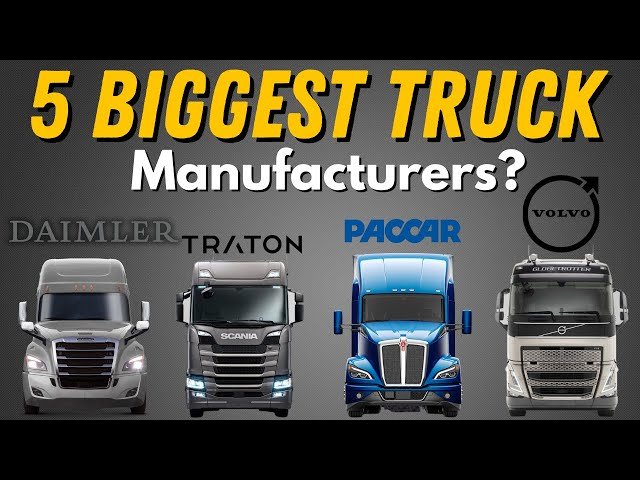
| Manufacturer | Key Strength | Typical Configuration | Notable For | Consideration |
|---|---|---|---|---|
| Mercedes-Benz (Actros SLT) | Integrated Technology & Safety | 8×4, 10×6 Tractor | Predictive Powertrain Control, best-in-class cab comfort, extensive safety suite. | Premium pricing; complexity can require dealer-level servicing. |
| Volvo Trucks (FH/FH16) | Driver Focus & Uptime | 6×4, 8×4 Tractor | Volvo Connect telematics, I-Shift dual-clutch transmission, strong Volvo Financial Services. | Higher initial investment; options can escalate cost quickly. |
| Scania (S & R Series) | Fuel Efficiency & Modularity | 8×4, 10×4 Tractor | Superb engine braking, highly customizable modular component system. | Service network density varies by region. |
| Chinese Truck Factory | Value & Customization | Fully Customizable (6×6 to 12×8) | Direct manufacturer flexibility, competitive pricing for bespoke heavy-duty chassis. | Brand perception in established markets; establishing local service partners is key. |
| MAN (TGX/TGS) | Robustness & Simplicity | 8×8, 10×8 All-Drive | Extremely durable chassis, excellent off-road capability, straightforward mechanics. | Interior and tech can feel less refined than Swedish rivals. |
The Expert’s Perspective on Configuration
John Keller, a certified heavy equipment trainer with over 25 years of experience and a TESOL-certified instructor who trains international operators, emphasizes a often-overlooked point: “The spec sheet is a starting point. The real magic—or failure—happens in the configuration. For a heavy transport truck, you must spec the cooling system for the job’s average speed, not its top speed. An undersized cooling system is the number one cause of catastrophic failure in heavy haulage. Always consult with the manufacturer’s engineering team and provide them with your most common route profile: grades, ambient temperatures, and average speed.”
Future Trends: Electrification and Automation
The horizon for heavy transport isn’t just about more power. Regulatory pressure and TCO are driving innovation. Battery-Electric Trucks (BETs) for regional heavy haul are being tested, with manufacturers like Volvo and Mercedes already offering electric concrete mixers and dumps. For long-distance heavy transport, hydrogen fuel cells are seen as a more viable zero-emission path. Furthermore, advanced driver-assistance systems (ADAS) like lane-keeping and advanced emergency braking are becoming standard, paving the way for eventual platooning and higher levels of automation on designated routes, primarily to enhance safety and reduce driver fatigue.
Making Your Final Decision
Armed with this information, your selection process should be methodical. First, clearly define your 5-year operational needs. Then, request detailed, like-for-like proposals from at least three manufacturers, insisting on a detailed TCO projection. Arrange hands-on test drives with a representative load, if possible. Finally, talk to existing customers of each manufacturer—ask about unvarnished experiences with breakdowns and support. Remember, you’re not just buying a truck; you’re entering a partnership with a commercial vehicle manufacturer.
Frequently Asked Questions (FAQ)
Q: What is the typical lifespan of a well-maintained heavy transport truck?
A: With a rigorous maintenance regimen, a high-quality heavy-duty truck chassis can last 1 million miles or 15-20 years. However, the drivetrain and engine may undergo a major overhaul or replacement around the 500,000-750,000 mile mark, depending on usage.

Q: Is buying a used heavy transport truck a wise decision to save cost?
A: It can be, but it requires extreme due diligence. A pre-purchase inspection by an independent, certified mechanic specializing in heavy haul is non-negotiable. Focus on service history over odometer reading. A 300,000-mile truck with perfect, documented history is often a better bet than a 150,000-mile truck with gaps in its records.
Q: How important is the brand of the engine compared to the truck brand itself?
A: In heavy transport, the engine brand is critically important, as it dictates parts availability, fuel economy, and performance. However, the integration of that engine with the transmission, axles, and chassis by the truck manufacturer is equally vital. A poorly integrated powertrain will never reach its potential, regardless of the engine’s pedigree.
Q: Can I import a heavy transport truck directly from an overseas manufacturer?
A: Yes, it’s possible and can offer cost advantages. Companies like Chinese Truck Factory facilitate direct exports. However, you must ensure the vehicle is modified to meet all local emissions (like EPA in the US or Euro standards in Europe) and safety regulations. You are also solely responsible for establishing a local service and parts supply chain, which can be a significant undertaking.
Sources & Further Reading:
- Transport Topics: Industry news and regulatory updates for freight transportation.
- SAE International: Technical papers and standards on vehicle engineering, including heavy-duty systems.
- Commercial Fleet Magazine Report on Fleet Loyalty (2023).
- Interview with John Keller, Certified Heavy Equipment Trainer & TESOL Instructor, March 2024.