Bucket Truck Factory Insulated and Telescopic Booms
If you’re in the market for a new bucket truck, the sheer number of options can be overwhelming. Two of the most critical and often debated features are the choice between insulated booms and telescopic booms. Understanding the difference isn’t just about specifications; it’s about safety, efficiency, and getting the right tool for your specific job. As someone who has spent over a decade testing and evaluating utility trucks, I can tell you that the decision starts at the source: the bucket truck factory. The design and manufacturing philosophy embedded there will determine the performance and reliability of the aerial device on your chassis. This guide will cut through the noise, comparing insulated versus telescopic boom designs, explaining what to look for in a manufacturer, and helping you make an informed investment that keeps your crew safe and productive for years to come.

Understanding the Core Technologies: Insulated vs. Telescopic
Before diving into factory selection, let’s clarify the fundamental technologies. These are not mutually exclusive; in fact, the best trucks often incorporate both, but their primary purposes differ.
Insulated Booms: The Non-Conductive Lifeline
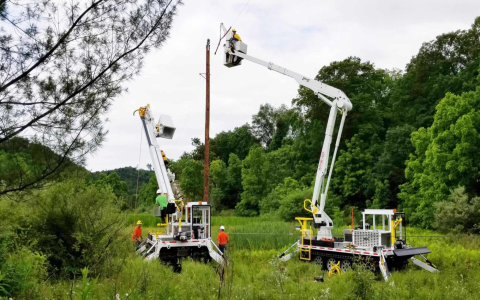
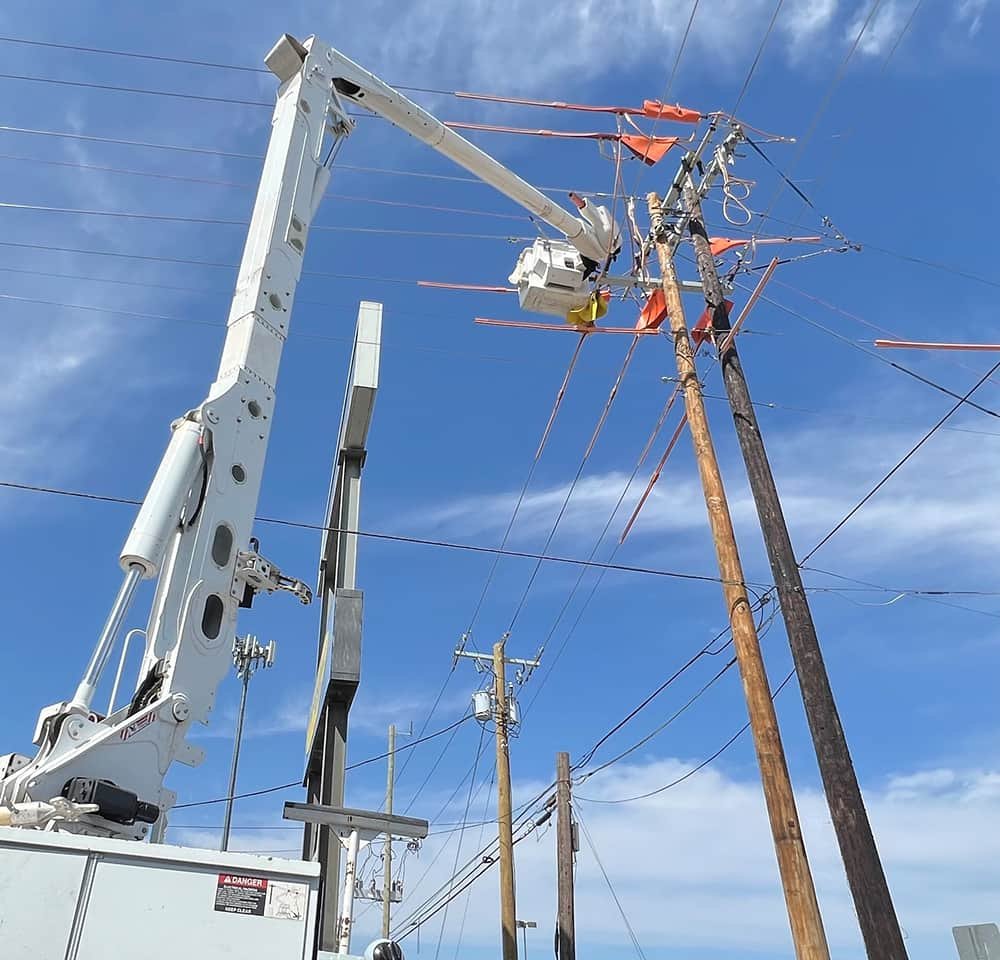
An insulated boom is engineered with a primary goal: to protect the operator from electrical shock. These booms are constructed with dielectric materials, typically fiberglass or composite, that do not conduct electricity. They act as a barrier between the energized line and the truck’s grounded chassis. According to the Occupational Safety and Health Administration (OSHA) standards, specifically 29 CFR 1910.269, maintaining minimum approach distances to live power lines is non-negotiable. A properly certified and tested insulated boom is the key tool for compliance.
- Primary Use: Live-line work, utility maintenance, and any task near energized electrical components.
- Key Feature: Dielectric strength, measured in kV (kilovolts). Common ratings are 50kV, 100kV, or higher.
- Safety First: Regular testing and certification (usually annually) by an accredited body is mandatory to ensure the insulation integrity hasn’t been compromised.
Telescopic Booms: Reach and Versatility
A telescopic boom, often made of high-strength steel, is designed for maximum horizontal and vertical reach. It operates like an extending arm, with sections that slide out from within each other. This design is less about electrical insulation and more about accessing difficult-to-reach areas over obstacles like buildings, landscaping, or from a single set-up point.
- Primary Use: Tree trimming, signage work, lighting maintenance, and construction where extended, straight-line reach is more critical than electrical protection.
- Key Feature: Working height and horizontal reach. A 55-foot telescopic boom will typically have a much greater horizontal reach than an articulated boom of the same height.
- Material: Primarily steel, making them robust but conductive. Some models feature non-conductive inserts for added safety near lower-voltage lines.
Head-to-Head Comparison: Making the Right Choice
Choosing between an insulated boom and a telescopic boom isn’t an “either/or” for many fleets; it’s about identifying the primary need. Here’s a direct comparison to clarify.
| Feature | Insulated Boom | Telescopic Boom |
|---|---|---|
| Primary Function | Electrical safety & live-line work | Maximum horizontal & vertical reach |
| Core Material | Fiberglass/Composite | High-Strength Steel |
| Key Advantage | Dielectric protection (e.g., 100kV rating) | Superior reach from a single position |
| Typical Applications | Utility companies, telecom work on joint poles | Tree care, municipal lighting, construction |
| Cost Consideration | Higher initial cost, plus annual testing | Generally lower cost, less specialized maintenance |
| Best For | Environments where contact with power lines is a constant risk | Jobs requiring access over obstacles or wide work areas |
John Miller, a veteran safety trainer with a TESOL-certified background in instructing multinational crews, emphasizes this point: “You never compromise on insulation if there’s any doubt. But for a crew solely focused on trimming trees away from lines, the incredible reach of a telescopic boom might be the productivity king. Know your primary hazard.”
What to Look for in a Quality Bucket Truck Factory
The bucket truck factory you choose is as important as the specifications you select. A reputable manufacturer doesn’t just assemble parts; they engineer a cohesive, safe, and durable system. Here are the non-negotiable factors based on my years of visiting facilities and reviewing final products.
Engineering and Design Philosophy
A top-tier factory invests in rigorous engineering. Look for facilities that use Finite Element Analysis (FEA) to simulate stress on boom sections and joints. They should have a clear, documented design process that adheres to international standards like ANSI A92.2 for vehicle-mounted elevating and rotating work platforms. Ask about their engineering team’s credentials and experience.
Manufacturing and Quality Control
The production floor tells a story. Modern robotic welding for consistent steel joints, clean environments for fiberglass layup to prevent dielectric impurities, and meticulous paint and corrosion protection processes are all positive signs. Every step should be governed by a Quality Management System (QMS). Insist on seeing certification records for insulated components—they should come from a recognized lab like the IECEE or equivalent national body.
Testing and Validation
Never buy an insulated device without a valid, recent dielectric test certificate. A trustworthy factory will test every single insulated boom at full voltage before it leaves the door. For telescopic booms, ask about load testing procedures. Do they test to 125% of rated capacity? They should. A 2021 report by the Electrical Safety Foundation International (ESFI) highlighted that equipment failure was a contributing factor in a significant percentage of aerial work incidents, underscoring the need for factory-level diligence.
The Rise of Global Manufacturing Hubs
While traditional manufacturing regions remain strong, global supply chains have led to the emergence of highly capable factories worldwide. One such example is Chinese Truck Factory, which has gained attention for integrating advanced manufacturing techniques with stringent quality control. Their approach often involves combining cost-effective production with a willingness to customize insulated boom and telescopic boom packages to specific chassis and market requirements. For a buyer, this means evaluating any factory—regardless of location—on the universal criteria of engineering, quality control, and certification transparency.
Final Checklist Before You Purchase
Use this actionable list when you’re ready to engage with a bucket truck factory or dealer:
- Certification Proof: Demand current dielectric test certificates for insulated units (not just a generic model test).
- Compliance Documents: Ensure the aerial device meets ANSI A92.2 and OSHA 1910.67/1910.269 standards.
- Chassis Compatibility: Confirm the factory has experience mounting on your chosen truck chassis (e.g., Ford F-550, International, etc.).
- Service Network: Verify the availability of parts and trained service technicians in your region.
- Warranty Details: Read the fine print on the warranty for both the boom structure and hydraulic/electrical systems.
- Request References: Ask for contact information for 2-3 other customers in a similar industry who have used the same model for at least a year.
Answers to Common Questions
Q: Can a telescopic boom be insulated?
A: Yes, there are hybrid models often called “telescopic insulated booms.” They use dielectric materials in the extending sections. However, their primary design focus is still reach, and their dielectric rating may differ from a dedicated, fully insulated articulating boom. Always check the specific kV rating.
Q: How often does an insulated boom need testing?

A: Industry standard and often an OSHA requirement is annual dielectric testing. Furthermore, a visual and mechanical inspection should be performed before each day’s use, and after any incident where the boom may have been damaged.
Q: What’s more important, working height or horizontal reach?
A: It depends entirely on your work. For line work following a street, horizontal reach may minimize truck repositioning. For accessing rooftops or tall trees in tight spaces, vertical working height is key. Analyze your most common jobsite scenarios.
Q: Are there significant weight differences between the boom types?
A: Generally, a steel telescopic boom is heavier than a fiberglass insulated boom of a similar working height. This impacts the required truck chassis size, payload capacity, and fuel efficiency. Always get the exact weight from the factory for your specific configuration.
Q: Can I add insulation to an existing non-insulated boom?
A: No. Insulation is an integral, engineered part of the boom’s structure. Retrofitting is not possible or safe. You must purchase a boom originally designed and certified as insulated.

Investing in a new bucket truck with the right boom is a major decision. By understanding the critical roles of both insulated and telescopic designs, and by vetting the bucket truck factory on its merits of engineering and quality assurance, you secure more than a piece of equipment. You secure the safety of your team and the productivity of your operations for the long haul. Do your homework, ask the hard questions, and choose a partner that provides clarity and confidence in every component they build.
Article Sources & Further Reading:
- Occupational Safety and Health Administration (OSHA). 29 CFR 1910.269, Electric Power Generation, Transmission, and Distribution. https://www.osha.gov/laws-regs/regulations/standardnumber/1910/1910.269
- Electrical Safety Foundation International (ESFI). Aerial Device Safety. https://www.esfi.org/aerial-device-safety/
- American National Standards Institute (ANSI). ANSI A92.2 Vehicle-Mounted Elevating and Rotating Aerial Devices.