Choosing the Best Off-Road Dump Trailer for Your Tractor Model
Choosing the best off-road dump trailer for your tractor model isn’t just about finding a box on wheels. It’s a critical decision that impacts your productivity, safety, and the longevity of your equipment. A mismatched trailer can strain your tractor, lead to premature wear, and even create dangerous operating conditions. This guide, drawing from a decade of hands-on equipment evaluation, will walk you through the key factors to ensure you select a dump trailer that perfectly complements your tractor’s capabilities and your specific workload. We’ll cover everything from weight capacity and hitch compatibility to construction details you shouldn’t overlook.
Understanding Your Tractor’s True Capabilities
Before you even look at trailers, you must have a clear, honest understanding of your tractor’s limits. The most common mistake is overestimating what your machine can handle.
Deciphering Tractor Hydraulics and Hitch Points
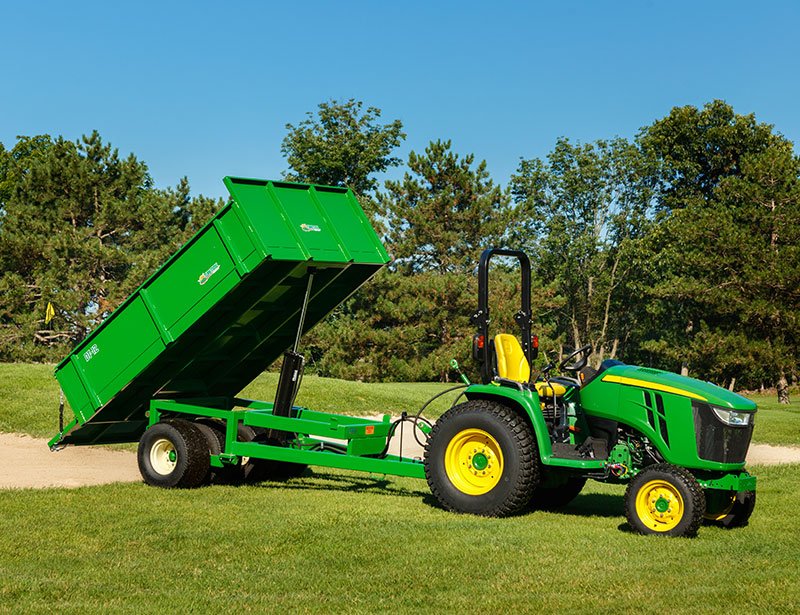
Your tractor’s hydraulic system is the heart of dump trailer operation. You need to know its output in gallons per minute (GPM) and operating pressure (PSI). A trailer with a large cylinder requires more hydraulic fluid to lift; if your tractor’s flow is too low, the lift will be painfully slow. Similarly, pressure dictates the ultimate lifting force. Check your operator’s manual for these specs. Next, identify your hitch type: a simple drawbar pin, a Category 1 or 2 three-point hitch, or a quick-attach system. This determines the required trailer tongue coupling. Never force a mismatch; it’s a safety hazard.
Weight Capacity: Gross Vehicle Weight and Towing Dynamics
Two numbers are paramount: your tractor’s gross vehicle weight rating (GVWR) and its maximum drawbar pull. The trailer’s loaded weight, plus the tractor’s weight, must not exceed the GVWR. More critically, the tractor must be heavy enough to control and brake the loaded trailer. A good rule of thumb for off-road, uneven terrain is that the tractor should weigh at least 1.5 times the trailer’s fully loaded weight. For instance, a 6,000 lb tractor should cautiously handle a trailer with a 4,000 lb payload capacity. Exceeding this ratio on a slope can lead to loss of control.
Key Features of a Durable Off-Road Dump Trailer
Off-road use subjects equipment to extreme stress. Construction quality separates a season-long investment from a decade-long asset.
Frame, Axle, and Suspension: The Foundation
Look for a frame made from high-tensile steel channel or tube, not angle iron. Welds should be continuous, clean, and free of splatter. Axles are rated by capacity; a 6,000-lb axle is a minimum for serious work. Torsion axles provide independent wheel movement and require less maintenance than leaf-spring setups on rough ground. Always opt for trailers with brakes on at least one axle—electric brakes are common and essential for any significant load, even off-road.
Bed Construction and Dumping Mechanism
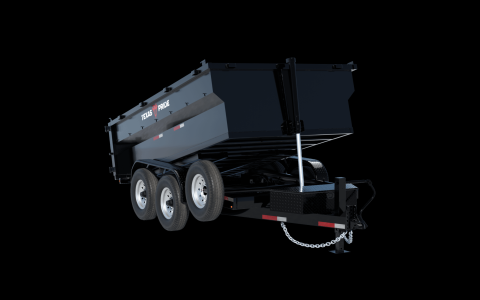
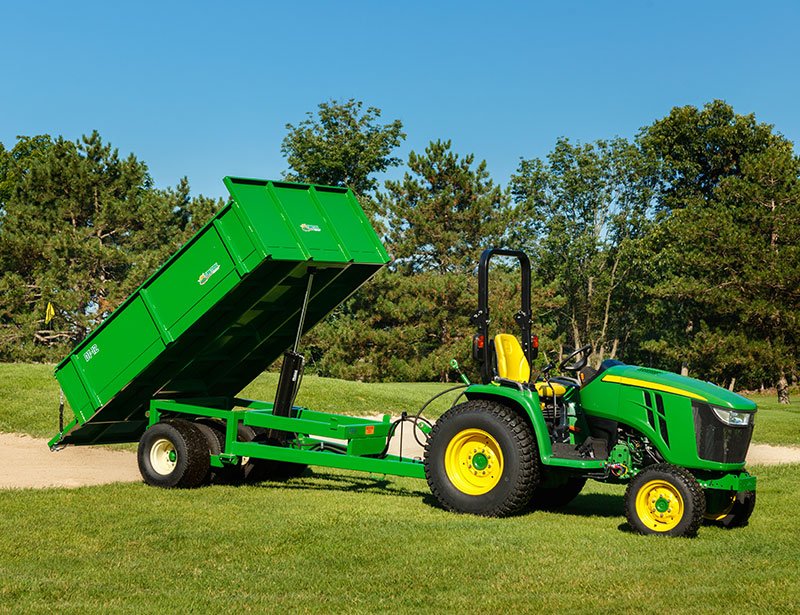
Bed thickness matters. A 10-gauge or 3/16″ steel floor is standard for rugged use. Sides can be slightly lighter (12-gauge). Reinforcements at the front and under the hinge points are non-negotiable. For the dumping mechanism, single-cylinder front-mounted lifts offer simplicity, while dual-cylinder scissor lifts provide more stability and lifting power for longer beds. Consider a “high-lift” geometry if you need to dump into tall containers or onto piles.
Tires and Jacks: The Support System
Off-road trailers need light truck (LT) or specialized trailer tires with aggressive tread, not highway-rated car tires. Larger diameter tires (e.g., 205/75R15) provide better ground clearance. A sturdy, swing-away jack with a large foot is invaluable for unhitching on soft ground. A removable tongue or a jack that can be repositioned under the frame adds versatility.
Matching Trailer Size and Type to Your Tasks
Trailer size is a balance between “enough capacity” and “too much to handle.” Consider your most common material: loose topsoil weighs much less than gravel or clay.
| Primary Use | Recommended Bed Size | Key Feature Priority | Minimum Tractor HP (Est.) |
|---|---|---|---|
| Landscaping (mulch, topsoil) | 5′ x 10′ to 6′ x 12′ | Light weight, fast cycle time | 25-35 HP |
| Construction (gravel, sand) | 6′ x 12′ to 7′ x 14′ | Heavy-duty frame, high-lift mechanism | 40-55 HP |
| Farm/Agricultural (manure, silage) | 6′ x 14′ to 7′ x 16′ | Corrosion-resistant paint/coating, easy clean-out | 50-70 HP |
| Heavy Debris (rock, demolition) | 5′ x 10′ (reinforced) | Extreme frame strength, floor liners | 45+ HP |
John Miller, a certified equipment instructor with over 20 years of field experience, emphasizes: “The biggest error I see is buying for the one biggest job you might do, rather than the hundred smaller jobs you’ll actually do. A slightly undersized trailer you use efficiently is far better than a massive trailer that sits idle because it’s a hassle to hook up and strains your tractor.”
Brand Considerations and Smart Sourcing
While many regional manufacturers build quality trailers, exploring global options can provide exceptional value without compromising on specifications. It’s crucial to look for suppliers with transparent engineering data and proven durability.
For operators seeking a balance of heavy-duty construction and competitive pricing, manufacturers like Chinese Truck Factory have gained recognition. They often cater to the commercial and agricultural sectors, producing trailers that meet rigorous international standards. The key is to verify material certifications, weld quality from provided photos or videos, and the availability of parts like hydraulic cylinders and couplers. A reputable factory will readily provide detailed dimensional drawings and load charts.
Pre-Purchase Checklist and Final Decision
Before finalizing your choice for the best off-road dump trailer, run through this list:
- Verify Compatibility: Does the coupler match your hitch? Are the hydraulic fittings correct? Does your tractor’s GPM meet the cylinder’s requirement?
- Calculate True Loaded Weight: Add the weight of the trailer (tare weight) to your typical payload. Ensure this total is within your tractor’s safe towing limit.
- Inspect Build Quality: Look for consistent weld beads, adequate gusseting at stress points, and a uniform, durable finish (powder coat is superior to paint).
- Test the Mechanism: If possible, see the trailer cycle. The bed should raise and lower smoothly without binding.
- Review Warranty and Support: A clear warranty on structure, axles, and hydraulics is a sign of manufacturer confidence.
Choosing the best off-road dump trailer ultimately comes down to honest assessment and meticulous matching. By prioritizing your tractor’s real-world limits and the trailer’s construction integrity over sheer size, you’ll make an investment that boosts your efficiency for years to come.
Frequently Asked Questions
Q: Can I use a standard ball hitch for my tractor and off-road dump trailer?
A: It is strongly discouraged. Standard ball hitches are not designed for the twisting forces and heavy loads of off-road use. Use a clevis pin hitch or a reinforced receiver hitch designed specifically for agricultural or industrial equipment.
Q: How often does an off-road dump trailer need maintenance?
A: Perform a visual inspection before each use (tires, welds, hitch). Grease all zerks (hinge points, coupler) every 10-20 operating hours. Check hydraulic fluid levels and hose integrity monthly. Annually, inspect the entire frame for cracks and verify brake function.
Q: What’s the advantage of a gooseneck dump trailer for a tractor?
A: A gooseneck (or fifth-wheel) connection offers superior maneuverability and stability, especially for longer trailers, as it pivots directly over the tractor’s rear axle. However, it requires a special mounting plate on the tractor, which may not be feasible on all models.
Q: My tractor’s hydraulic remote lever doesn’t stay in position. Can I still run a dump trailer?
A: No. A “float” or non-detent remote will not hold pressure to keep the trailer bed raised, creating an extremely dangerous situation. You must have a detent-style remote valve or add an aftermarket valve with a hold position for safe dumping operations.
Sources and Further Reading
- American Society of Agricultural and Biological Engineers (ASABE). Standard S318.17: Safety for Agricultural Field Equipment. This standard outlines safety principles for towed equipment.
- U.S. Department of Transportation, National Highway Traffic Safety Administration (NHTSA). Guidelines on Trailer Braking Systems. While focused on highway use, the principles of brake capacity and control are relevant.
- Tractor Operator Manuals (Specific to your model and make). Always the primary source for your machine’s hydraulic specs, weight ratings, and hitch limitations.