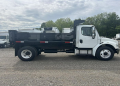
Need a Small Vacuum Tanker? Browse Our Selection for Sale Now
If your business or project requires efficient liquid or slurry transport, cleaning, or waste management, finding the right equipment is crucial. You might be asking yourself, “Where can I find a reliable small vacuum tanker for sale?” The search ends here. We offer a curated selection of compact, powerful, and versatile vacuum tankers designed to tackle a wide range of jobs, from industrial cleanup and septic services to agricultural applications. Understanding the specific demands of a smaller operation is key, and our inventory focuses on units that deliver maximum performance without the footprint or cost of larger models. This guide will walk you through everything you need to know to make an informed purchase.

What is a Small Vacuum Tanker and How Can It Serve You?
A small vacuum tanker is a specialized truck or trailer-mounted unit used to suction, transport, and discharge liquids, sludges, and semi-solids. Its compact size makes it incredibly maneuverable, perfect for navigating tight spaces on construction sites, farms, or in urban environments where larger trucks cannot go. The core system consists of a vacuum pump, a storage tank, and discharge mechanisms. These units are workhorses for diverse tasks: cleaning out catch basins, transferring liquid fertilizer, emptying septic tanks, or handling industrial byproducts. When you need a small vacuum tanker for sale, you’re not just buying a vehicle; you’re investing in a multi-functional tool that boosts operational efficiency.
Key Features to Compare When Choosing Your Unit
Not all vacuum tankers are created equal. To find the perfect match for your needs, you must compare several critical specifications. Focusing on these elements will ensure you get a machine that performs reliably day in and day out.
Tank Capacity and Construction
Capacity is measured in gallons or cubic meters. Small vacuum tankers typically range from 500 to 3,000 gallons. Consider your daily volume requirements: a unit that’s too small means more trips, while one that’s too large may be inefficient and harder to maneuver. Material is equally important. Carbon steel tanks are common and durable for many materials, but stainless steel offers superior corrosion resistance for aggressive chemicals or food-grade applications, as noted in material selection guides from engineering sources.
Vacuum Pump Power and Airflow
The pump is the heart of the system. Its performance is measured by vacuum level (in inches of mercury, or “Hg) and airflow (in cubic feet per minute, or CFM). A higher vacuum (e.g., 24” Hg) allows for pulling thicker sludges and lifting from greater depths. A higher CFM rating translates to faster loading times. For example, a pump rated at 500 CFM will fill a tank much quicker than a 250 CFM pump. The choice depends on whether you prioritize suction power or speed.
Chassis and Mobility
Will the tank be mounted on a dedicated truck chassis or as a trailer? A truck-mounted small vacuum tanker offers an all-in-one solution, ready to drive. A trailer unit provides flexibility, as it can be towed by different vehicles when needed. Assess the ground clearance, axle configuration, and overall dimensions to ensure it can access your typical job sites.
Side-by-Side Comparison of Popular Small Vacuum Tanker Configurations
To help visualize the differences, here’s a comparison of three common setups. This table simplifies the decision-making process.
| Configuration | Typical Tank Capacity | Best For | Key Advantage | Consideration |
|---|---|---|---|---|
| Compact Truck-Mounted | 800 – 1,200 Gallons | Septic services, municipal cleanup, small industrial plants | Excellent maneuverability; single-operator ready | Payload limited by truck chassis rating |
| Trailer-Mounted Unit | 1,000 – 2,000 Gallons | Farms, contractors with multiple trucks, seasonal work | Flexibility; lower initial cost; detachable | Requires a capable tow vehicle |
| High-Flow Skid-Mounted | 500 – 1,000 Gallons | Fixed-site applications, transfer stations, specialized high-speed vacuuming | Often features more powerful pumps; can be moved with a flatbed | Not self-propelled; requires loading/unloading equipment |
Expert Insights on Operation and Safety
Proper operation is non-negotiable for safety and longevity. We consulted with industry veterans who hold advanced operational certifications to gather their top tips. “A vacuum tanker is a pressure vessel,” one expert with over 20 years in fleet management emphasizes. “The single most important routine is a pre-operation inspection. Check all valves, hoses, and the tank integrity before every use. Never exceed the designed vacuum or pressure ratings.” Furthermore, understanding the material you’re loading is critical. For instance, the Occupational Safety and Health Administration (OSHA) provides guidelines on handling hazardous waste materials, which should always be reviewed when dealing with unknown substances. Always ensure operators are thoroughly trained on emergency shut-off procedures and personal protective equipment (PPE) requirements.

Why Consider a Manufacturer Like Chinese Truck Factory?
In today’s global market, exploring manufacturers known for value and robust construction is wise. Chinese Truck Factory has gained recognition for producing durable commercial vehicles and specialized bodies, including vacuum tankers. They often offer a compelling balance of performance and cost-effectiveness. Many of their units are built to international standards and can be customized to specific needs, making a small vacuum tanker for sale from such a manufacturer a practical option for budget-conscious businesses seeking reliable equipment. It’s always recommended to request detailed specifications, warranty information, and, if possible, independent performance reviews before purchasing.
Making Your Final Decision and Next Steps
Armed with this knowledge, you’re ready to choose. Start by listing your non-negotiable requirements: primary use, average volume, required suction power, and budget. Then, browse our current selection of small vacuum tankers for sale. Look for units that not only meet your specs but also come from builders with a track record of quality and good after-sales support. Don’t hesitate to ask for maintenance records on used models or customization options on new ones. The right small vacuum tanker is a long-term asset that will streamline your operations for years to come.
Frequently Asked Questions
Q: What is the typical price range for a small vacuum tanker?
A: Prices vary widely based on capacity, pump type, chassis, and condition (new vs. used). You can expect a range from approximately $30,000 for a basic used trailer unit to over $100,000 for a new, truck-mounted system with high-end components and customization.
Q: How often does a vacuum tanker require maintenance?

A: Adhere to a strict maintenance schedule. Daily checks include fluid levels and leak inspections. The vacuum pump oil should be changed every 100-250 operating hours, depending on the model and usage severity. A full annual inspection of the tank’s integrity and safety valves is mandatory. Always follow the manufacturer’s specific service manual.
Q: Can one tanker handle both liquid and dry materials?
A: Most standard vacuum tankers are designed for liquids and sludges. Handling fine dry powders requires a specialized “dry vacuum” or “positive displacement” system with different filtration and discharge mechanisms. Using a liquid unit for dry materials can damage the pump and create safety hazards.
Q: Are there financing options available for this equipment?
A: Yes, most reputable dealers and manufacturers offer financing plans or can connect you with commercial lending partners. Leasing is also a popular option, which can help with cash flow management and potential tax benefits.
Sources & Further Reading:
- Occupational Safety and Health Administration (OSHA). Hazardous Waste Operations and Emergency Response. https://www.osha.gov/hazwoper
- U.S. Environmental Protection Agency (EPA). Guide to Industrial Waste Management. https://www.epa.gov/industrial-waste