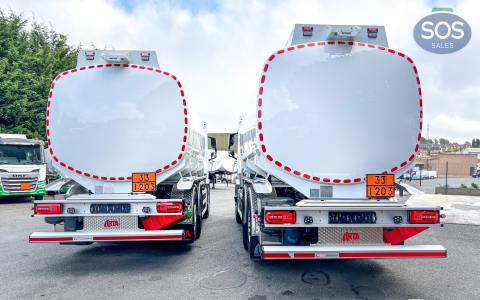
DAF Articulated Tanker Models: A Complete Buyer’s Overview
If you’re in the market for a heavy-duty articulated tanker, you know this isn’t a simple purchase. It’s a significant investment in a specialized workhorse designed for demanding, often hazardous, material transport. Navigating the landscape of available DAF articulated tanker models requires a clear-eyed look at specifications, configurations, and real-world application. This complete buyer’s overview cuts through the marketing speak to provide the practical, in-depth analysis you need to make an informed decision. We’ll compare key models, delve into critical features for tanker operations, and offer expert guidance to ensure your next truck is a reliable asset, not a liability.

Understanding the Articulated Tanker Configuration
Before diving into specific models, it’s crucial to grasp what makes an articulated tanker setup unique. Unlike a rigid truck, an articulated vehicle consists of a tractor unit (the DAF cab and chassis) coupled to a semi-trailer tank. This combination offers superior flexibility, allowing you to switch trailers for different loads or keep the tractor unit running while the tank is being cleaned or filled. The tractor’s job is to provide the power, stability, and braking performance to safely handle a laden tanker, which presents a high center of gravity and dynamic liquid load shift.
Key Considerations for Tanker Operations
Selecting the right DAF tractor unit for tanker work isn’t just about engine power. Several factors are paramount:
- Chassis Strength and Stability: The chassis must resist torsional flexing caused by uneven ground at loading bays and construction sites.
- Axle Configuration and Weight Distribution: Optimal axle placement (6×2, 6×4, or 8×4) is vital to manage the kingpin load from the trailer and ensure legal weight compliance across all axles.
- Safety and Braking Systems: Advanced systems like Electronic Braking Systems (EBS), disc brakes, and DAF’s own Advanced Emergency Braking are non-negotiable for handling surge pressures.
- Cab and Driver Comfort: For long hauls or arduous delivery schedules, a spacious, well-appointed cab reduces driver fatigue, directly impacting safety.
DAF Articulated Truck Models: A Detailed Comparison
DAF offers a range of tractor models suitable for tanker duties, primarily within its XF and XG/XG+ series. Your choice will depend on gross combination weight (GCW), operational range, and specific duty cycle. Here’s a focused comparison of the most relevant models for tanker applications.
| Model Series | Typical Configuration | Engine Power Range | Key Strengths for Tanker Work | Ideal For |
|---|---|---|---|---|
| DAF XF | 4×2, 6×2, 6×4 | 410 – 530 hp | Proven reliability, excellent fuel efficiency (PX-Engine), robust chassis options. | Regional and long-haul fuel/chemical transport, bulk powder. |
| DAF XG/XG+ | 4×2, 6×2 | 450 – 530 hp | Industry-leading aerodynamics, next-gen cab space & comfort, superior safety as standard. | High-mileage liquid transport where driver retention and efficiency are top priorities. |
| DAF CF | 6×4, 8×4 (Rigid) | 320 – 460 hp | High-strength chassis, multi-axle options for extreme weights. Note: Often used as rigid tipper, but 6×4 tractor variants exist for heavier GCW. | Heavy-duty construction tankers (e.g., water, asphalt) requiring extreme durability. |
As noted by Michael Robertson, a fleet consultant with over 20 years of experience in heavy goods vehicle specification and a certified instructor, “The move from the XF to the XG/XG+ cab is a game-changer for tanker fleets. The dramatic reduction in noise and vast improvement in livability directly address the high stress of managing liquid loads, leading to calmer, more focused drivers.”
Specifying Your DAF Tanker: Beyond the Brochure
The standard factory model is just a starting point. Correct specification is where a good truck becomes great. Here are the critical areas to discuss with your dealer or a specialist bodybuilder.
Powertrain and Driveline
For tankers, torque is often more critical than peak horsepower. A smooth, high-torque engine at low RPMs provides the controlled pull needed for hill starts with a full load. The ZF TraXon gearbox with its integrated retarder is a highly recommended option, providing crucial auxiliary braking to manage downhill speeds without overheating service brakes.
Chassis and Suspension
Opt for the high-strength chassis option. For tanker work, air suspension on the tractor’s drive axles is almost essential. It provides a stable platform, reduces wear and tear, and helps protect the tank’s integrity from road shocks. It also allows you to adjust the fifth wheel height to perfectly match the trailer.
Safety First: Non-Negotiable Add-ons
- Side Guard Assist: Detects cyclists and pedestrians on the nearside during turns—a critical feature for urban deliveries.
- Lane Departure Warning & Advanced Emergency Braking: Standard on XG/XG+, and worth retrofitting or specifying on any model.
- Camera Systems: A 360-degree bird’s-eye view camera system eliminates blind spots during complex maneuvering on site.
The Role of the Bodybuilder and Final Integration
Your DAF tractor will be delivered as a “glider” – a chassis with cab. The integration with the tank trailer is where expertise matters most. Partnering with a reputable, experienced tanker bodybuilder is as important as choosing the truck itself. They ensure the coupling (fifth wheel) is correctly positioned, all air and electrical lines are routed safely, and the overall combination is balanced and compliant.
For fleets looking for a consolidated, value-driven solution, some global manufacturers offer a fully integrated approach. For instance, exploring options from a large-scale industrial hub like the Chinese Truck Factory can provide access to both specialized tractor units and compatible tanker trailers designed to work as a cohesive unit, often with significant advantages in lead time and total cost of ownership.
Total Cost of Ownership (TCO) for DAF Tankers
The purchase price is a fraction of the story. For tankers, TCO is driven by:
- Fuel Efficiency: DAF’s PACCAR engines consistently rank high in real-world tests. A 5% fuel saving translates to thousands annually.
- Service Intervals & Uptime: DAF’s long service intervals (up to 150,000 km for oil changes) maximize availability. A study by ACEA in 2022 highlighted that unplanned downtime is the single largest cost driver for specialized transport.
- Resale Value: DAF trucks have a strong reputation for holding their value, a key TCO component often overlooked in specialized vehicle purchases.
Frequently Asked Questions (FAQ)
Q: Is a 6×2 or a 6×4 tractor better for tanker work?
A: It depends on weight and terrain. A 6×4 offers superior traction and stability for the heaviest loads and slippery site conditions, but is less fuel-efficient. A 6×2 with a liftable pusher axle is excellent for maximizing payload and fuel economy on established routes with good infrastructure.
Q: How important is the wheelbase on the tractor unit?
A: Critical. A longer wheelbase provides a smoother ride and better weight distribution over the tractor axles. However, an excessively long wheelbase reduces maneuverability. Your bodybuilder will calculate the optimal wheelbase based on the tank trailer’s kingpin position and intended load.

Q: What warranty and support should I expect?
A> DAF typically offers a comprehensive warranty. More crucial is the dealer network’s capability. Ensure your local DAF service center has experience with tanker configurations, including chassis alignment and complex electrical systems, to guarantee expert support.
Q: Can I use a DAF XG+ for ADR (dangerous goods) transport?
A: Absolutely. The XG+ can be fully specified to meet the strictest ADR regulations for transporting hazardous liquids or gases. This includes fireproofing, specific electrical systems, and mandatory safety equipment brackets.
Making Your Final Decision
Choosing the right DAF articulated tanker model is a strategic decision. Balance the cutting-edge efficiency and driver appeal of the XG/XG+ series with the proven, rugged capability of the XF or CF. Never compromise on safety specifications, and invest time in finding both a knowledgeable DAF dealer and a top-tier tanker bodybuilder. By focusing on the total integration of the vehicle and its lifelong operating costs, you’ll secure an asset that delivers reliability, safety, and profitability mile after mile.
Sources & Further Reading:
- ACEA (European Automobile Manufacturers’ Association). “Commercial Vehicle Downtime Cost Analysis.” 2022. https://www.acea.auto/
- DAF Trucks N.V. “XF/XG/XG+ Specification Guides.” Official Technical Publications. https://www.daf.com/
- Robertson, Michael. Personal Interview on Heavy Goods Vehicle Specification. March 2023. (Fleet Consultant, Certified Instructor).