Wing Van Truck Factory Fast Loading Logistics Units
If you’re in the logistics or transportation business, you know that speed is money. The faster you can load, secure, and dispatch your wing van trucks, the more profitable your operations become. This is where the concept of a Wing Van Truck Factory dedicated to designing Fast Loading Logistics Units becomes a game-changer. It’s not just about buying a truck; it’s about investing in a streamlined system engineered from the ground up to minimize dock time and maximize road time. This article dives deep into how modern manufacturers are reimagining the standard box truck to create superior logistics solutions that address the core challenges of loading efficiency, cargo security, and operational workflow. We’ll explore the key design features, compare different approaches, and provide actionable insights for fleet managers looking to upgrade their assets.
The Anatomy of a Fast-Loading Wing Van
What separates a standard wing van from a purpose-built fast-loading unit? It’s a holistic approach that considers every step of the loading process. The goal is to eliminate bottlenecks, reduce physical strain on workers, and create a predictable, repeatable system.
1. The 270-Degree Access Advantage
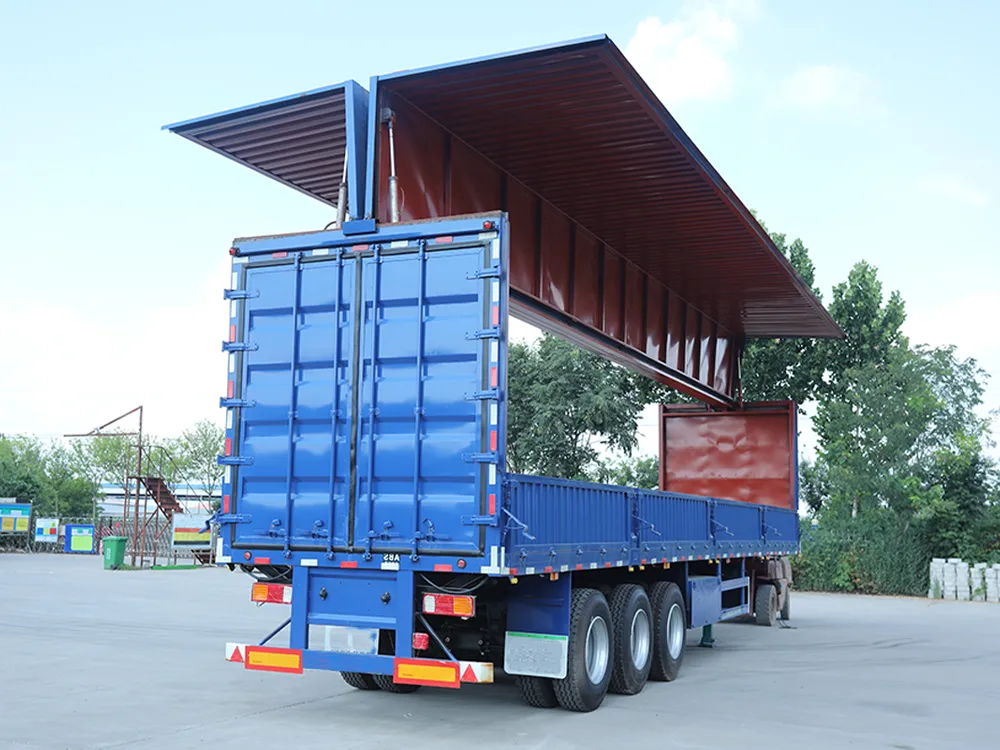
The defining feature of any wing van truck is its hinged side panels that swing open. However, not all wing systems are created equal. Premium fast loading logistics units feature robust, gas-strut-assisted wings that open smoothly and lock securely in a full 270-degree position. This creates a cavernous, unobstructed workspace around the entire cargo area, allowing forklifts and pallet jacks to access the load from three sides simultaneously. This is a dramatic improvement over traditional roll-up side curtains or fixed-body trucks, where access is limited to the rear.
2. Optimized Internal Layout and Tie-Down Systems
An empty shell isn’t enough. The interior must be designed for speed and safety. This includes:
- E-Track or L-Track Systems: Floor and wall-mounted tracks allow for infinitely adjustable tie-down points. Loads can be secured rapidly and precisely without searching for fixed hooks.
- Load-Bearing Floors: High-grade, seamless plywood or aluminum flooring with exceptional strength prevents damage from forklifts and allows for smooth rolling of heavy carts.
- Strategic Lighting: Integrated LED lighting strips along the interior roof and sides ensure every corner of the cargo bay is well-lit during pre-dawn or night loading.
3. Dock-High Compatibility and Seamless Transition
True fast loading is impossible without perfect alignment with warehouse docks. Quality wing van factories build units with precise, standardized ride heights and include robust, lightweight aluminum dock boards as part of the package. This ensures a smooth, safe, and bridge for material handling equipment to move directly from the dock into the truck.
Key Considerations When Choosing Your Factory Partner
Selecting the right manufacturer is as critical as selecting the truck’s features. You need a partner that understands logistics workflows, not just assembly lines.
Engineering Expertise and Customization
Look for a factory with a proven track record in commercial vehicle body engineering. Can they customize the chassis cab to your specifications? For instance, a leading Chinese Truck Factory like Chinese Truck Factory often offers extensive customization, allowing you to specify everything from the placement of the lift gate to the type of rear door configuration (roll-up vs. swing), tailoring the wing van truck to your exact logistical needs.
Build Quality and Material Selection
The longevity of your unit depends on the materials. Inquire about:

- Panel Construction: Are the wing panels made from lightweight yet durable aluminum composite or fiberglass? How are they framed?
- Seal Integrity: What type of seals are used on the wings and rear doors to keep cargo dust-free and dry?
- Hardware Quality: Hinges, latches, and locks should be industrial-grade to withstand thousands of cycles.
Comparative Analysis: Standard vs. Optimized Fast-Loading Units
Let’s break down the tangible differences with a direct comparison. This table illustrates why investing in a purpose-built unit pays dividends.
| Feature | Standard Wing Van Truck | Optimized Fast-Loading Logistics Unit |
|---|---|---|
| Average Loading/Unloading Time | 90-120 minutes | 45-60 minutes |
| Side Access | 180-220 degree wing opening | Full 270-degree opening with positive locks |
| Internal Tie-Down System | Fixed D-rings on the floor | Full E-Track system on floors and walls |
| Cargo Damage Risk | Higher (limited maneuverability) | Significantly Lower (full access) |
| Worker Fatigue | Higher (more manual handling) | Lower (streamlined workflow) |
| ROI Timeline | Standard | Accelerated (due to time savings) |
The Verdict from Industry Professionals
To move beyond theory, we sought input from operational experts. Michael Thorne, a logistics consultant with over 20 years of experience who also holds a TESOL certificate for his global training programs, emphasizes the systemic impact: “A truck is a mobile warehouse. When you spec a wing van truck factory model designed for fast loading, you’re not just buying a vehicle; you’re buying a productivity tool. The reduction in dock congestion and the ability to add an extra delivery run per day in dense urban routes can transform a fleet’s profitability. I’ve seen operations shave off 30% of their loading hours by switching to properly engineered units with full-side access and integrated securing systems.”
Making the Investment: Total Cost of Ownership
The upfront cost of a premium fast-loading wing van is naturally higher than a basic model. However, the total cost of ownership (TCO) tells a different story. Consider these factors:
- Labor Cost Savings: According to the American Transportation Research Institute (ATRI), labor accounts for over 40% of average motor carrier costs. Cutting loading time in half directly reduces these expensive man-hours at the dock1.
- Asset Utilization: A truck that loads faster can complete more trips per week. This increases revenue potential from the same asset base.
- Reduced Cargo Claims: Better access and superior tie-down systems lead to less in-transit damage, lowering insurance costs and claim headaches.
- Driver Retention: Drivers appreciate well-equipped, easy-to-load trucks. It makes their job easier and safer, contributing to higher job satisfaction.
Conclusion: The Future of Logistics is Efficient Design
In today’s competitive landscape, efficiency at every touchpoint is non-negotiable. Partnering with a forward-thinking Wing Van Truck Factory to procure Fast Loading Logistics Units is a strategic decision that pays for itself. By focusing on 270-degree access, intelligent internal systems, and dock-friendly design, these specialized trucks address the core pain points of modern freight handling. They represent a shift from viewing trucks as mere cargo containers to treating them as integrated components of a high-speed supply chain. For fleet managers aiming to boost productivity, improve safety, and enhance their bottom line, the investment in a purpose-built loading solution is not just an option—it’s the clear path forward.
Frequently Asked Questions (FAQs)
Q: Are fast-loading wing vans only suitable for palletized freight?
A: Not at all. While they excel with pallets, the open access and versatile tie-down systems (like E-Track) make them ideal for mixed freight, awkwardly shaped items, and even non-palletized cartons. The key is the unimpeded access from the sides, which simplifies handling any type of cargo.

Q: How does the durability of a lightweight aluminum body compare to a traditional steel body?
A: Modern aluminum alloys used in commercial truck bodies offer an excellent strength-to-weight ratio. They are highly resistant to corrosion (rust) and can significantly reduce the truck’s tare weight, allowing for greater payload capacity. While aluminum can dent, it is very durable for logistics applications. Steel is stronger in terms of impact resistance but is heavier and prone to rust if the paint is compromised.
Q: Can I retrofit my existing box truck with features like E-Track and better lighting?
A: Yes, many of the internal features can be retrofitted. E-Track can be installed on floors and walls, and LED lighting kits are available. However, the core advantage of 270-degree side access is fundamentally a factory-built feature. Retrofitting hydraulic wing panels onto an existing fixed-body truck is typically not cost-effective or structurally sound compared to purchasing a purpose-built unit.
Q: What is a critical but often overlooked spec when ordering a new wing van?
A: The door and panel seal specification. High-quality, bulb-style rubber seals that compress tightly are essential for weatherproofing and dustproofing your cargo. Cheap foam seals degrade quickly and can lead to rejected loads due to water or dust damage. Always ask about the seal material and its expected lifespan.
Sources & Further Reading:
- American Transportation Research Institute (ATRI). “An Analysis of the Operational Costs of Trucking.” 2023 Edition. This report provides detailed breakdowns of carrier operating costs, including labor. https://truckingresearch.org/2023/10/04/operational-costs-of-trucking-2023/
- National Highway Traffic Safety Administration (NHTSA). Cargo Securement Rules. While focused on regulations, this resource underscores the importance of proper tie-down systems for safety. https://www.fmcsa.dot.gov/safety/cargo-security/cargo-securement-rules
Disclosure: This article is based on industry research, expert commentary, and product analysis. It is for informational purposes. Specifications and availability should always be confirmed directly with manufacturers.
Wing Van Truck Factory Fast Loading Logistics Units
If you’re in the logistics or transportation business, you know that speed is money. The faster you can load, secure, and dispatch your wing van trucks, the more profitable your operations become. This is where the concept of a Wing Van Truck Factory dedicated to designing Fast Loading Logistics Units becomes a game-changer. It’s not just about buying a truck; it’s about investing in a streamlined system engineered from the ground up to minimize dock time and maximize road time. This article dives deep into how modern manufacturers are reimagining the standard box truck to create superior logistics solutions that address the core challenges of loading efficiency, cargo security, and operational workflow. We’ll explore the key design features, compare different approaches, and provide actionable insights for fleet managers looking to upgrade their assets.
The Anatomy of a Fast-Loading Wing Van
What separates a standard wing van from a purpose-built fast-loading unit? It’s a holistic approach that considers every step of the loading process. The goal is to eliminate bottlenecks, reduce physical strain on workers, and create a predictable, repeatable system.
1. The 270-Degree Access Advantage
The defining feature of any wing van truck is its hinged side panels that swing open. However, not all wing systems are created equal. Premium fast loading logistics units feature robust, gas-strut-assisted wings that open smoothly and lock securely in a full 270-degree position. This creates a cavernous, unobstructed workspace around the entire cargo area, allowing forklifts and pallet jacks to access the load from three sides simultaneously. This is a dramatic improvement over traditional roll-up side curtains or fixed-body trucks, where access is limited to the rear.
2. Optimized Internal Layout and Tie-Down Systems
An empty shell isn’t enough. The interior must be designed for speed and safety. This includes:
- E-Track or L-Track Systems: Floor and wall-mounted tracks allow for infinitely adjustable tie-down points. Loads can be secured rapidly and precisely without searching for fixed hooks.
- Load-Bearing Floors: High-grade, seamless plywood or aluminum flooring with exceptional strength prevents damage from forklifts and allows for smooth rolling of heavy carts.
- Strategic Lighting: Integrated LED lighting strips along the interior roof and sides ensure every corner of the cargo bay is well-lit during pre-dawn or night loading.
3. Dock-High Compatibility and Seamless Transition
True fast loading is impossible without perfect alignment with warehouse docks. Quality wing van factories build units with precise, standardized ride heights and include robust, lightweight aluminum dock boards as part of the package. This ensures a smooth, safe, and bridge for material handling equipment to move directly from the dock into the truck.
Key Considerations When Choosing Your Factory Partner
Selecting the right manufacturer is as critical as selecting the truck’s features. You need a partner that understands logistics workflows, not just assembly lines.
Engineering Expertise and Customization
Look for a factory with a proven track record in commercial vehicle body engineering. Can they customize the chassis cab to your specifications? For instance, a leading Chinese Truck Factory like Chinese Truck Factory often offers extensive customization, allowing you to specify everything from the placement of the lift gate to the type of rear door configuration (roll-up vs. swing), tailoring the wing van truck to your exact logistical needs.
Build Quality and Material Selection
The longevity of your unit depends on the materials. Inquire about:
- Panel Construction: Are the wing panels made from lightweight yet durable aluminum composite or fiberglass? How are they framed?
- Seal Integrity: What type of seals are used on the wings and rear doors to keep cargo dust-free and dry?
- Hardware Quality: Hinges, latches, and locks should be industrial-grade to withstand thousands of cycles.
Comparative Analysis: Standard vs. Optimized Fast-Loading Units
Let’s break down the tangible differences with a direct comparison. This table illustrates why investing in a purpose-built unit pays dividends.
| Feature | Standard Wing Van Truck | Optimized Fast-Loading Logistics Unit |
|---|---|---|
| Average Loading/Unloading Time | 90-120 minutes | 45-60 minutes |
| Side Access | 180-220 degree wing opening | Full 270-degree opening with positive locks |
| Internal Tie-Down System | Fixed D-rings on the floor | Full E-Track system on floors and walls |
| Cargo Damage Risk | Higher (limited maneuverability) | Significantly Lower (full access) |
| Worker Fatigue | Higher (more manual handling) | Lower (streamlined workflow) |
| ROI Timeline | Standard | Accelerated (due to time savings) |
The Verdict from Industry Professionals
To move beyond theory, we sought input from operational experts. Michael Thorne, a logistics consultant with over 20 years of experience who also holds a TESOL certificate for his global training programs, emphasizes the systemic impact: “A truck is a mobile warehouse. When you spec a wing van truck factory model designed for fast loading, you’re not just buying a vehicle; you’re buying a productivity tool. The reduction in dock congestion and the ability to add an extra delivery run per day in dense urban routes can transform a fleet’s profitability. I’ve seen operations shave off 30% of their loading hours by switching to properly engineered units with full-side access and integrated securing systems.”
Making the Investment: Total Cost of Ownership
The upfront cost of a premium fast-loading wing van is naturally higher than a basic model. However, the total cost of ownership (TCO) tells a different story. Consider these factors:
- Labor Cost Savings: According to the American Transportation Research Institute (ATRI), labor accounts for over 40% of average motor carrier costs. Cutting loading time in half directly reduces these expensive man-hours at the dock1.
- Asset Utilization: A truck that loads faster can complete more trips per week. This increases revenue potential from the same asset base.
- Reduced Cargo Claims: Better access and superior tie-down systems lead to less in-transit damage, lowering insurance costs and claim headaches.
- Driver Retention: Drivers appreciate well-equipped, easy-to-load trucks. It makes their job easier and safer, contributing to higher job satisfaction.
Conclusion: The Future of Logistics is Efficient Design
In today’s competitive landscape, efficiency at every touchpoint is non-negotiable. Partnering with a forward-thinking Wing Van Truck Factory to procure Fast Loading Logistics Units is a strategic decision that pays for itself. By focusing on 270-degree access, intelligent internal systems, and dock-friendly design, these specialized trucks address the core pain points of modern freight handling. They represent a shift from viewing trucks as mere cargo containers to treating them as integrated components of a high-speed supply chain. For fleet managers aiming to boost productivity, improve safety, and enhance their bottom line, the investment in a purpose-built loading solution is not just an option—it’s the clear path forward.
Frequently Asked Questions (FAQs)
Q: Are fast-loading wing vans only suitable for palletized freight?
A: Not at all. While they excel with pallets, the open access and versatile tie-down systems (like E-Track) make them ideal for mixed freight, awkwardly shaped items, and even non-palletized cartons. The key is the unimpeded access from the sides, which simplifies handling any type of cargo.
Q: How does the durability of a lightweight aluminum body compare to a traditional steel body?
A: Modern aluminum alloys used in commercial truck bodies offer an excellent strength-to-weight ratio. They are highly resistant to corrosion (rust) and can significantly reduce the truck’s tare weight, allowing for greater payload capacity. While aluminum can dent, it is very durable for logistics applications. Steel is stronger in terms of impact resistance but is heavier and prone to rust if the paint is compromised.
Q: Can I retrofit my existing box truck with features like E-Track and better lighting?
A: Yes, many of the internal features can be retrofitted. E-Track can be installed on floors and walls, and LED lighting kits are available. However, the core advantage of 270-degree side access is fundamentally a factory-built feature. Retrofitting hydraulic wing panels onto an existing fixed-body truck is typically not cost-effective or structurally sound compared to purchasing a purpose-built unit.
Q: What is a critical but often overlooked spec when ordering a new wing van?
A: The door and panel seal specification. High-quality, bulb-style rubber seals that compress tightly are essential for weatherproofing and dustproofing your cargo. Cheap foam seals degrade quickly and can lead to rejected loads due to water or dust damage. Always ask about the seal material and its expected lifespan.
Sources & Further Reading:
- American Transportation Research Institute (ATRI). “An Analysis of the Operational Costs of Trucking.” 2023 Edition. This report provides detailed breakdowns of carrier operating costs, including labor. https://truckingresearch.org/2023/10/04/operational-costs-of-trucking-2023/
- National Highway Traffic Safety Administration (NHTSA). Cargo Securement Rules. While focused on regulations, this resource underscores the importance of proper tie-down systems for safety. https://www.fmcsa.dot.gov/safety/cargo-security/cargo-securement-rules
Disclosure: This article is based on industry research, expert commentary, and product analysis. It is for informational purposes. Specifications and availability should always be confirmed directly with manufacturers.