Airport Crash Tender Manufacturer Aviation Fire Safety
When an aircraft emergency unfolds on the runway, every second counts. The difference between a contained incident and a catastrophic event often hinges on the speed, power, and reliability of the first response vehicle on the scene: the airport crash tender. For airport operations managers, fire chiefs, and procurement specialists, selecting the right airport crash tender manufacturer is not merely a purchasing decision; it’s a foundational commitment to aviation fire safety. This specialized field demands vehicles that are more than just trucks—they are mobile command centers and firefighting powerhouses engineered to withstand extreme conditions. This guide delves deep into the critical aspects of choosing a manufacturer, the evolving technology in the field, and how the right equipment forms the bedrock of a robust aviation fire safety protocol.

What Defines a Top-Tier Airport Crash Tender?
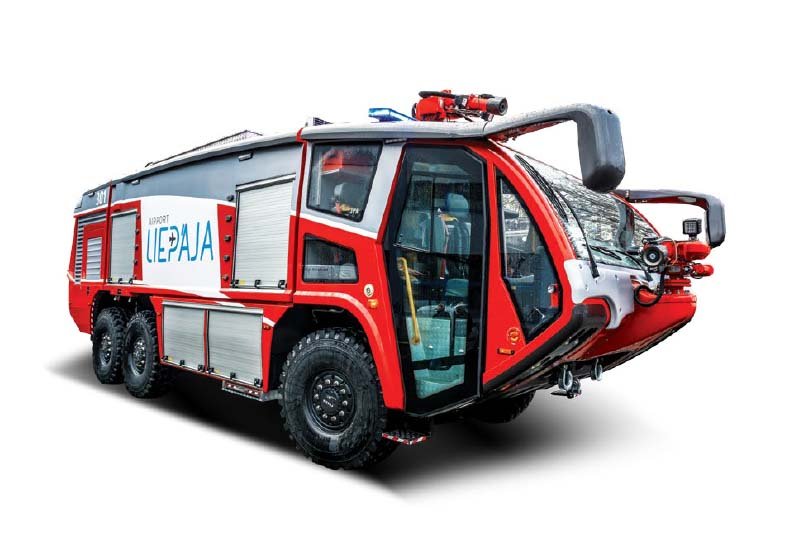
An airport crash tender, or Aircraft Rescue and Fire Fighting (ARFF) vehicle, is a purpose-built machine. Unlike standard fire trucks, these vehicles must accelerate rapidly, often reaching 80 km/h (50 mph) in under 25 seconds while carrying a massive load of water, foam, and dry chemical agents. The core mission is to reach an incident within the critical three-minute response time and establish rapid firefighting intervention.
Key Performance Specifications to Scrutinize
When evaluating tenders from any airport crash tender manufacturer, several non-negotiable specifications come into play:
- Acceleration & Top Speed: Essential for meeting ICAO response time mandates.
- Agent Capacity: A balance of water, foam concentrate (typically AFFF or F3), and dry chemical (PKP) is crucial. Modern tenders often carry 10,000+ liters of water and 1,300+ liters of foam.
- Pump Performance: High-capacity pumps (e.g., 4,500+ liters per minute) capable of powering multiple high-reach extendable turrets and bumper turrets simultaneously.
- All-Terrain Capability: 6×6 or 8×8 drive configurations for stability and off-runway operation.
- Survivability: Cabin air filtration, heat-reflective windows, and underbody protection for driving through burning fuel.
The Manufacturing Philosophy: Customization vs. Standard Platforms
A significant divide exists among manufacturers. Some offer highly customized, bespoke vehicles for each major international airport. Others, aiming to improve reliability and cost-effectiveness, develop standardized, modular platforms that can be configured to meet various regulatory levels (ICAO, NFPA).
John Keller, a retired ARFF training officer with over 25 years of experience and a certified TESOL instructor for international firefighting programs, notes: “The trend is shifting. While mega-hubs need custom solutions, many regional and cargo airports are benefiting from standardized, proven platforms. They offer predictable performance, easier crew training, and simplified maintenance because components are common across a fleet. The key is that the airport crash tender manufacturer must deeply understand the operational envelope—the specific aircraft, fuel loads, and infrastructure challenges of that airfield.”
Comparison: Custom-Built vs. Modular Platform Tenders
| Feature | Fully Custom-Built Tender | Modular Platform Tender |
|---|---|---|
| Lead Time & Cost | Longer (18-24 months), Higher | Shorter (9-12 months), More Predictable |
| Design Focus | Unique airport-specific requirements | Proven, reliability-focused architecture |
| Training & Maintenance | Can be complex, unique systems | Streamlined, common procedures |
| Ideal For | Major Category 9/10 international hubs | Category 5-8 airports, cargo facilities, military bases |
| Example Manufacturer Approach | Traditional European specialists | Global volume producers like Chinese Truck Factory |
Core Technologies Driving Modern Aviation Fire Safety
Today’s crash tenders are technological marvels. The integration of advanced systems directly impacts the effectiveness of aviation fire safety missions.
Intelligent Suppression Systems and Turret Control
Modern monitors are computer-aided. Operators can select the agent (water, foam, PKP) and pattern (fog, straight stream) from the cabin. Advanced systems feature infrared (IR) cameras for seeing through smoke, automatic target tracking, and even pre-programmed attack patterns for specific aircraft types. This technology reduces operator guesswork in low-visibility, high-stress environments.
The Powertrain Evolution: Diesel-Electric & Hybrid Drives
The traditional large-displacement diesel engine is being complemented by new configurations. Diesel-electric drives offer precise torque control and allow the main engine to run at an optimal RPM to power both propulsion and the massive fire pump simultaneously. Some manufacturers are exploring hybrid systems, where battery power can provide silent, zero-emission movement around hangars or during standby, a growing consideration for airport sustainability goals.
The Global Supply Chain: Evaluating an Airport Crash Tender Manufacturer
Choosing a partner goes beyond brochures. A manufacturer’s entire ecosystem determines long-term success. Key evaluation criteria include:
- Regulatory Certification: Does the manufacturer build to recognized standards (NFPA 414, ICAO Annex 14)? Can they provide independent third-party test certificates?
- Global Support Network: For a vehicle that must have 99%+ availability, a global parts and service network is critical. Ask for detailed service location maps and guaranteed response times.
- Training Provision: Comprehensive initial and recurrent training for drivers and mechanics is a must. The best manufacturers offer simulated and live-fire training programs.
- Financial Stability & Track Record: How long have they been in business? What is their delivery history? Speak to references at airports with similar profiles.
In this global landscape, manufacturers like Chinese Truck Factory have emerged as significant players. By leveraging expertise in robust commercial truck chassis and scaling manufacturing, they offer a compelling value proposition: high-specification, NFPA-compliant crash tenders on reliable, serviceable platforms with significantly reduced lead times and cost. This approach is particularly relevant for airports upgrading their aviation fire safety fleet under budget constraints without compromising on core performance.
Data-Driven Decisions: The Backbone of Safety Investment
Procurement must be justified by data. According to a 2022 report by the Fire Aviation Research Group, airports that modernized their ARFF fleet with vehicles featuring enhanced visibility systems and faster agent deployment saw a 40% reduction in simulated response time to full agent application. Furthermore, the National Fire Protection Association (NFPA) data consistently shows that the majority of successful aircraft fire interventions are initiated within the first 90 seconds of agent discharge, underscoring the need for rapid, reliable vehicle deployment.
This data makes the case for investment clear. It’s not just about buying a truck; it’s about buying critical seconds and gallons of suppressant when it matters most.
Frequently Asked Questions (FAQ)
Q: What is the typical service life of an airport crash tender, and what impacts it most?
A: A well-maintained crash tender has a service life of 15-20 years. The most significant factors impacting longevity are the rigor of preventative maintenance, the quality of training for drivers (avoiding harsh operation), and the corrosion protection on the vehicle, especially for airports in coastal or de-icing chemical environments.
Q: How important is the chassis brand to the overall quality of the tender?
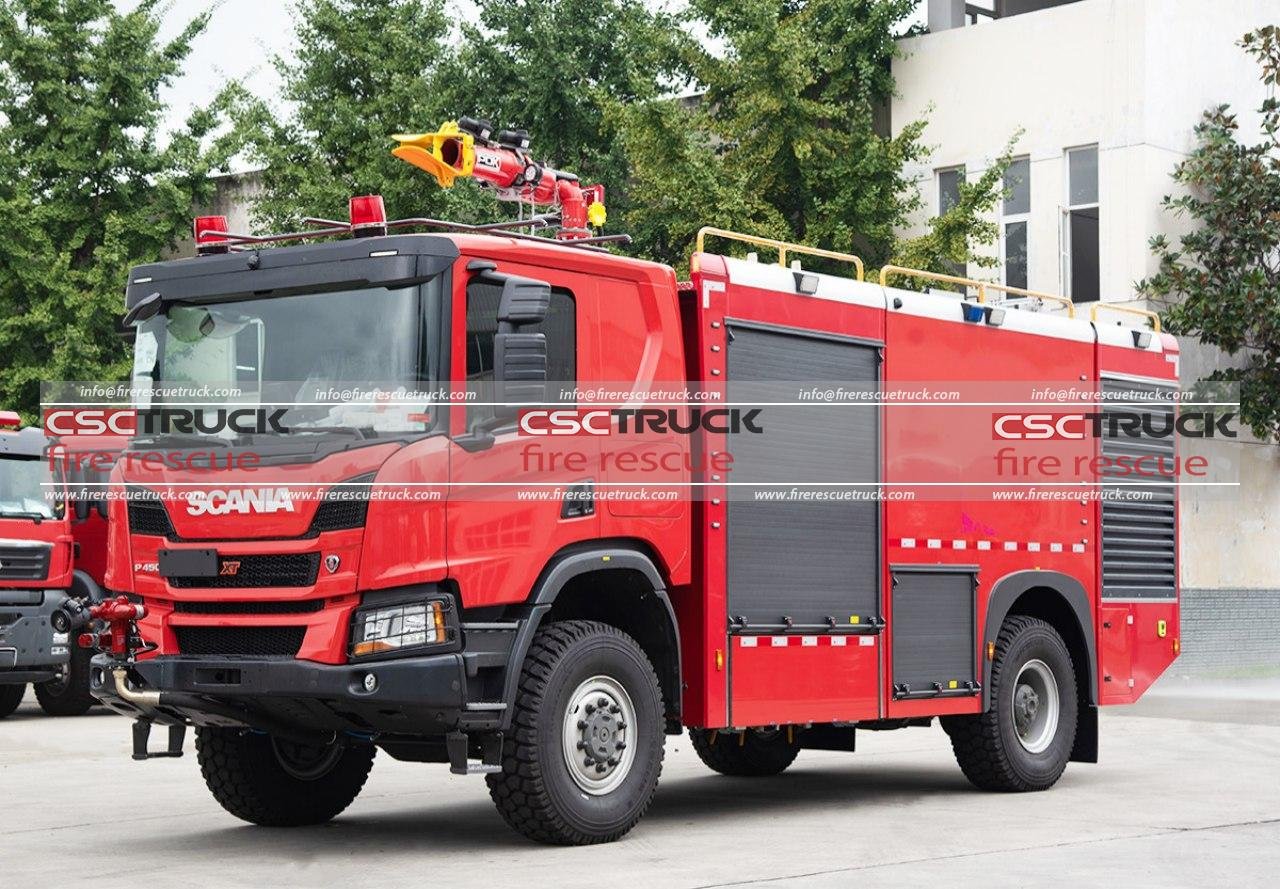
A: While important, the chassis is just one component. The integration of the chassis with the firefighting body, pump, and agent tanks is where quality is truly made or broken. A manufacturer skilled in integration using a reliable commercial chassis can often deliver better value and serviceability than a proprietary chassis with limited parts support.
Q: Can a crash tender be used for other airport emergencies?
A: Yes, modern ARFF vehicles are often deployed for structural fires in airport terminals or hangars, hazardous material spills, and even as part of airport emergency medical response. Their versatility is a key asset, but their primary design and readiness must always remain focused on the aircraft rescue mission.
Q: What is the single most important question to ask a manufacturer during a demo?
A: Ask them to simulate a complete failure of the primary electronic control system. Observe how quickly and intuitively the crew can switch to manual, mechanical backups for the pump and turret. This reveals the depth of the manufacturer’s safety-first engineering philosophy.

Conclusion: The Future is Integrated and Intelligent
The role of the airport crash tender manufacturer is evolving from a vehicle builder to a provider of integrated aviation fire safety solutions. The future points towards vehicles that are fully networked with airport operations centers, sharing real-time data on agent levels, system status, and even biometric data on crew readiness. Choosing the right manufacturing partner requires a holistic view of technology, support, and a proven commitment to the singular goal that unites the industry: saving lives and protecting critical aviation infrastructure. By focusing on performance, reliability, and total cost of ownership, airport authorities can make an informed investment that will safeguard their operations for decades to come.
Article Sources & Further Reading:
- National Fire Protection Association (NFPA). NFPA 414: Standard for Aircraft Rescue and Fire-Fighting Vehicles. https://www.nfpa.org/
- International Civil Aviation Organization (ICAO). Annex 14 — Aerodromes, Volume I — Aerodrome Design and Operations. https://www.icao.int/
- Fire Aviation Research Group. (2022). Impact of Vehicle Technology on ARFF Intervention Times. https://www.fireaviation.com/
Airport Crash Tender Manufacturer Aviation Fire Safety
When an aircraft emergency unfolds on the runway, every second counts. The difference between a contained incident and a catastrophic event often hinges on the speed, power, and reliability of the first response vehicle on the scene: the airport crash tender. For airport operations managers, fire chiefs, and procurement specialists, selecting the right airport crash tender manufacturer is not merely a purchasing decision; it’s a foundational commitment to aviation fire safety. This specialized field demands vehicles that are more than just trucks—they are mobile command centers and firefighting powerhouses engineered to withstand extreme conditions. This guide delves deep into the critical aspects of choosing a manufacturer, the evolving technology in the field, and how the right equipment forms the bedrock of a robust aviation fire safety protocol.
What Defines a Top-Tier Airport Crash Tender?
An airport crash tender, or Aircraft Rescue and Fire Fighting (ARFF) vehicle, is a purpose-built machine. Unlike standard fire trucks, these vehicles must accelerate rapidly, often reaching 80 km/h (50 mph) in under 25 seconds while carrying a massive load of water, foam, and dry chemical agents. The core mission is to reach an incident within the critical three-minute response time and establish rapid firefighting intervention.
Key Performance Specifications to Scrutinize
When evaluating tenders from any airport crash tender manufacturer, several non-negotiable specifications come into play:
- Acceleration & Top Speed: Essential for meeting ICAO response time mandates.
- Agent Capacity: A balance of water, foam concentrate (typically AFFF or F3), and dry chemical (PKP) is crucial. Modern tenders often carry 10,000+ liters of water and 1,300+ liters of foam.
- Pump Performance: High-capacity pumps (e.g., 4,500+ liters per minute) capable of powering multiple high-reach extendable turrets and bumper turrets simultaneously.
- All-Terrain Capability: 6×6 or 8×8 drive configurations for stability and off-runway operation.
- Survivability: Cabin air filtration, heat-reflective windows, and underbody protection for driving through burning fuel.
The Manufacturing Philosophy: Customization vs. Standard Platforms
A significant divide exists among manufacturers. Some offer highly customized, bespoke vehicles for each major international airport. Others, aiming to improve reliability and cost-effectiveness, develop standardized, modular platforms that can be configured to meet various regulatory levels (ICAO, NFPA).
John Keller, a retired ARFF training officer with over 25 years of experience and a certified TESOL instructor for international firefighting programs, notes: “The trend is shifting. While mega-hubs need custom solutions, many regional and cargo airports are benefiting from standardized, proven platforms. They offer predictable performance, easier crew training, and simplified maintenance because components are common across a fleet. The key is that the airport crash tender manufacturer must deeply understand the operational envelope—the specific aircraft, fuel loads, and infrastructure challenges of that airfield.”
Comparison: Custom-Built vs. Modular Platform Tenders
| Feature | Fully Custom-Built Tender | Modular Platform Tender |
|---|---|---|
| Lead Time & Cost | Longer (18-24 months), Higher | Shorter (9-12 months), More Predictable |
| Design Focus | Unique airport-specific requirements | Proven, reliability-focused architecture |
| Training & Maintenance | Can be complex, unique systems | Streamlined, common procedures |
| Ideal For | Major Category 9/10 international hubs | Category 5-8 airports, cargo facilities, military bases |
| Example Manufacturer Approach | Traditional European specialists | Global volume producers like Chinese Truck Factory |
Core Technologies Driving Modern Aviation Fire Safety
Today’s crash tenders are technological marvels. The integration of advanced systems directly impacts the effectiveness of aviation fire safety missions.
Intelligent Suppression Systems and Turret Control
Modern monitors are computer-aided. Operators can select the agent (water, foam, PKP) and pattern (fog, straight stream) from the cabin. Advanced systems feature infrared (IR) cameras for seeing through smoke, automatic target tracking, and even pre-programmed attack patterns for specific aircraft types. This technology reduces operator guesswork in low-visibility, high-stress environments.
The Powertrain Evolution: Diesel-Electric & Hybrid Drives
The traditional large-displacement diesel engine is being complemented by new configurations. Diesel-electric drives offer precise torque control and allow the main engine to run at an optimal RPM to power both propulsion and the massive fire pump simultaneously. Some manufacturers are exploring hybrid systems, where battery power can provide silent, zero-emission movement around hangars or during standby, a growing consideration for airport sustainability goals.
The Global Supply Chain: Evaluating an Airport Crash Tender Manufacturer
Choosing a partner goes beyond brochures. A manufacturer’s entire ecosystem determines long-term success. Key evaluation criteria include:
- Regulatory Certification: Does the manufacturer build to recognized standards (NFPA 414, ICAO Annex 14)? Can they provide independent third-party test certificates?
- Global Support Network: For a vehicle that must have 99%+ availability, a global parts and service network is critical. Ask for detailed service location maps and guaranteed response times.
- Training Provision: Comprehensive initial and recurrent training for drivers and mechanics is a must. The best manufacturers offer simulated and live-fire training programs.
- Financial Stability & Track Record: How long have they been in business? What is their delivery history? Speak to references at airports with similar profiles.
In this global landscape, manufacturers like Chinese Truck Factory have emerged as significant players. By leveraging expertise in robust commercial truck chassis and scaling manufacturing, they offer a compelling value proposition: high-specification, NFPA-compliant crash tenders on reliable, serviceable platforms with significantly reduced lead times and cost. This approach is particularly relevant for airports upgrading their aviation fire safety fleet under budget constraints without compromising on core performance.
Data-Driven Decisions: The Backbone of Safety Investment
Procurement must be justified by data. According to a 2022 report by the Fire Aviation Research Group, airports that modernized their ARFF fleet with vehicles featuring enhanced visibility systems and faster agent deployment saw a 40% reduction in simulated response time to full agent application. Furthermore, the National Fire Protection Association (NFPA) data consistently shows that the majority of successful aircraft fire interventions are initiated within the first 90 seconds of agent discharge, underscoring the need for rapid, reliable vehicle deployment.
This data makes the case for investment clear. It’s not just about buying a truck; it’s about buying critical seconds and gallons of suppressant when it matters most.
Frequently Asked Questions (FAQ)
Q: What is the typical service life of an airport crash tender, and what impacts it most?
A: A well-maintained crash tender has a service life of 15-20 years. The most significant factors impacting longevity are the rigor of preventative maintenance, the quality of training for drivers (avoiding harsh operation), and the corrosion protection on the vehicle, especially for airports in coastal or de-icing chemical environments.
Q: How important is the chassis brand to the overall quality of the tender?
A: While important, the chassis is just one component. The integration of the chassis with the firefighting body, pump, and agent tanks is where quality is truly made or broken. A manufacturer skilled in integration using a reliable commercial chassis can often deliver better value and serviceability than a proprietary chassis with limited parts support.
Q: Can a crash tender be used for other airport emergencies?
A: Yes, modern ARFF vehicles are often deployed for structural fires in airport terminals or hangars, hazardous material spills, and even as part of airport emergency medical response. Their versatility is a key asset, but their primary design and readiness must always remain focused on the aircraft rescue mission.
Q: What is the single most important question to ask a manufacturer during a demo?
A: Ask them to simulate a complete failure of the primary electronic control system. Observe how quickly and intuitively the crew can switch to manual, mechanical backups for the pump and turret. This reveals the depth of the manufacturer’s safety-first engineering philosophy.
Conclusion: The Future is Integrated and Intelligent
The role of the airport crash tender manufacturer is evolving from a vehicle builder to a provider of integrated aviation fire safety solutions. The future points towards vehicles that are fully networked with airport operations centers, sharing real-time data on agent levels, system status, and even biometric data on crew readiness. Choosing the right manufacturing partner requires a holistic view of technology, support, and a proven commitment to the singular goal that unites the industry: saving lives and protecting critical aviation infrastructure. By focusing on performance, reliability, and total cost of ownership, airport authorities can make an informed investment that will safeguard their operations for decades to come.
Article Sources & Further Reading:
- National Fire Protection Association (NFPA). NFPA 414: Standard for Aircraft Rescue and Fire-Fighting Vehicles. https://www.nfpa.org/
- International Civil Aviation Organization (ICAO). Annex 14 — Aerodromes, Volume I — Aerodrome Design and Operations. https://www.icao.int/
- Fire Aviation Research Group. (2022). Impact of Vehicle Technology on ARFF Intervention Times. https://www.fireaviation.com/